
P0128 Code: Coolant Temperature Below Thermostat — What It Means
A P0128 code means the engine computer decided the engine coolant did not warm up to the expected temperature in the expected time. Its official wording is "coolant temperature below thermostat regulating temperature." Drivers usually notice that the engine takes a long time to warm up, the heater blows cooler air than usual and the check engine light is on.
The code describes a condition, not a part. A thermostat that is stuck open is a typical cause, but a coolant temperature sensor reading, its wiring, the coolant level or other faults can lead to the same code. This guide explains what P0128 typically means, the common symptoms, how it differs from a sensor fault and how diagnosis confirms the cause. It describes typical patterns, not findings from a particular customer's car.
What a P0128 code means
An engine is designed to run at a specific operating temperature. The coolant thermostat stays closed while the engine is cold so it warms up quickly, then opens to let coolant flow to the radiator and hold that temperature. The engine computer uses the coolant temperature reading for many decisions, including fuel delivery and when certain self-tests run.
To set P0128, the computer compares the actual coolant temperature with what it expects after a period of driving, taking conditions such as outside temperature and engine load into account. If the coolant stays below the expected level for too long, it stores the code. The exact criteria depend on the platform.
P0128 does not automatically mean the thermostat failed or the sensor is dead. It says the engine did not reach the expected temperature, and there is no single cause that applies to every vehicle.
Typical symptoms when the engine stays too cool
Possible P0128 symptoms include:
- the temperature gauge rises slowly or stays lower than usual;
- weak heat from the heater, especially on cold days or at highway speed;
- a check engine light;
- higher fuel use, because a cool engine typically runs a richer mixture;
- in some cases, emissions readiness monitors that do not complete.
Not every vehicle shows all of these, and some show only the warning light. The symptoms are often more noticeable in cold weather. A cool-running engine may seem harmless, but it can affect fuel use, cabin heat and how the engine's self-tests run, so it is worth diagnosing rather than ignoring. Our check engine light guide covers what to do when the lamp comes on.
Searches often pair P0128 with a brand, such as Jeep. The code definition is broadly the same across makes, but thermostat design and test criteria vary.
P0128 vs a bad coolant temperature sensor (P0118 family)
The engine coolant temperature (ECT) sensor reports coolant temperature to the engine computer. If its reading is wrong, the computer may think the engine is cooler than it really is, which can also lead to P0128.
A sensor circuit fault usually sets its own codes. P0118, for example, typically means the ECT sensor circuit signal is too high, which the computer reads as an unrealistically cold engine. That is a circuit or signal problem, such as an open wire or a poor connection, and it is a different branch from a thermostat that opens too early.
Low coolant level is another possible branch. If the sensor is not surrounded by coolant, its reading can be misleading. Topping up coolant is not a diagnosis by itself; it is important to find out why the level dropped.
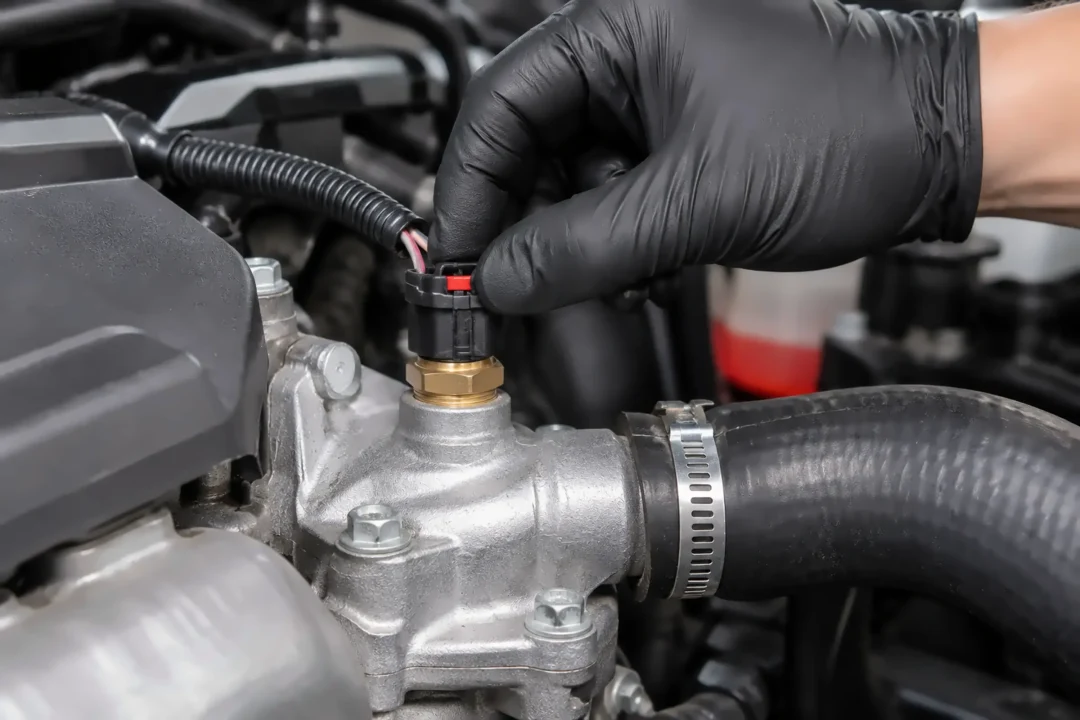
Illustrative in-shop inspection; sensor location varies by engine.
Why a stuck-open thermostat is a typical cause — and not the only one
A thermostat stuck open, or one that opens too early, lets coolant flow to the radiator before the engine has warmed up. That is a typical cause of P0128, and it often matches the symptoms well: slow warm-up and weak heat, especially in cold weather.
It is still not the only possibility. A wrong sensor reading, damaged sensor wiring, a corroded connector or low coolant can produce the same code. Some vehicles also use electronically controlled thermostats or other designs, which add their own circuits to check.
That is why replacing the thermostat first, without testing, can miss the cause. If the sensor reading or its wiring is the problem, a new thermostat does not change it, and the light returns.
How we diagnose a P0128 in the shop
At eForce Automotive Service, car diagnostics for a P0128 follows the evidence:
- Scan and freeze frame. We read all stored codes, including coolant temperature sensor codes, and the conditions when P0128 set.
- Live temperature data. We watch the coolant temperature reading as the engine warms up and compare it with what the platform expects.
- Coolant level and visible leaks. We check the coolant level and look for visible signs of leaks.
- Sensor circuit checks. We inspect the ECT sensor connector and wiring and test the circuit. Wiring and connector faults are repaired under auto electrical repair.
- Conclusion. We explain whether the evidence points to the thermostat, the sensor or its circuit, coolant level or another branch, and what the next step is.
Our service for P0128 is diagnosis, plus repair of sensor wiring and connectors when testing confirms them. If diagnosis points to the thermostat or cooling-system mechanics, we explain the finding and next step; this article offers diagnosis, not thermostat replacement.
Do not open a hot cooling system. Coolant under pressure can cause serious burns.
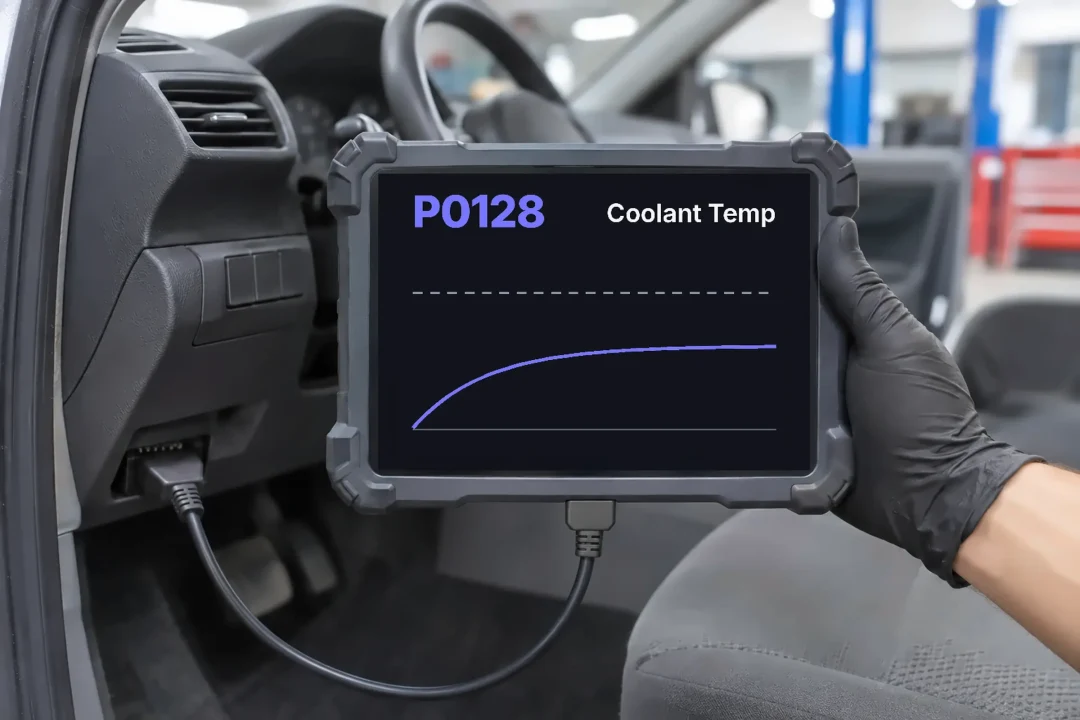
Illustrative scan tool screen; not data from a customer's vehicle.
Book through the phone number in the site header. We work in-shop only, by appointment, at 1713 W Baltic Pl, Englewood, CO 80110. See our services and service area.
FAQ
What does a P0128 code mean?
It means the engine coolant did not reach the thermostat regulating temperature in the time the engine computer expected. The code describes the condition, not the failed part.
What are typical symptoms of a P0128?
Typical signs are slow warm-up, a low temperature gauge reading, weak heater output, higher fuel use and a check engine light. Some vehicles show only the light.
Does P0128 always mean a bad thermostat?
No. A stuck-open thermostat is a typical cause, but a wrong sensor reading, its wiring, low coolant or other faults can set the same code.
Is P0128 the same as a bad coolant temperature sensor or a P0118?
Not necessarily. P0128 means the engine stayed too cool, while P0118 typically points to a sensor circuit fault. A sensor problem can contribute to P0128, so both are checked.
Will replacing the thermostat always clear a P0128?
No. A new thermostat helps only when the thermostat caused the code. Diagnosis confirms the cause first; our offer here is diagnosis, not thermostat replacement.
How do I book P0128 diagnosis in Englewood?
Call the number in the site header to set an in-shop appointment. Mention how long warm-up takes and whether the heater output has changed.
General information, not a diagnosis of your vehicle. Never open a hot cooling system; coolant under pressure can cause burns.