
ADAS Calibration: When You Need It After a Windshield or Repair
ADAS calibration (Advanced Driver Assistance Systems) is the process of aligning cameras, radar, and related sensors so features like lane keeping, automatic emergency braking, and adaptive cruise control aim at the real world correctly. After a windshield replacement, bumper repair, or certain module work, the car may need a formal calibration — not just a code clear.
This guide explains when calibration is required, static vs dynamic calibration in plain language, symptoms of a missed calibration, and what we need from you. It is general information, not a promise that every vehicle can be calibrated on the first visit. Our shop is in Englewood, Colorado, serving the Denver and south Denver metro area. If you need ADAS calibration near me after glass or body work done elsewhere, we handle that calibration in-shop; see our services overview. We work by appointment only.
Quick answer: what ADAS calibration is
- What it does: teaches or verifies sensor aim and software alignment so ADAS features work as designed.
- When it is often required: after windshield/camera work, front radar/bumper work, some suspensions/alignments done elsewhere, and certain module replacements.
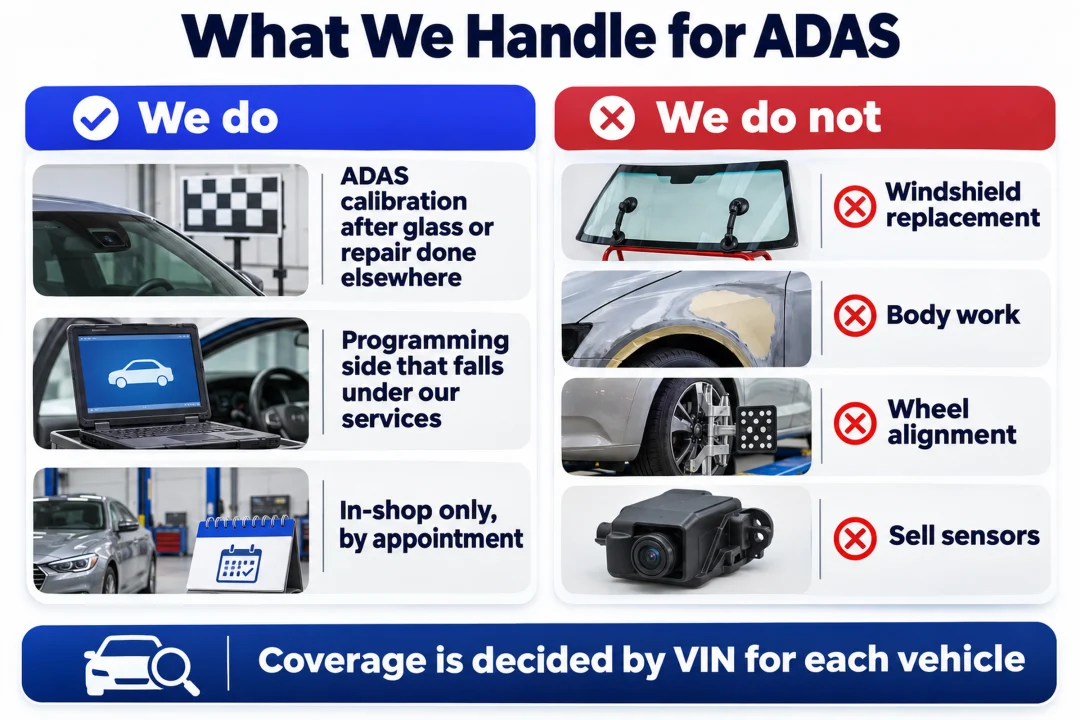
- What we do not do: windshield replacement, body work, or wheel alignment. Those are done elsewhere; we handle the calibration / programming side that falls under our services.
- VIN first: not every make/model/year uses the same procedure or targets. We verify by VIN before promising a specific method.
When it is required
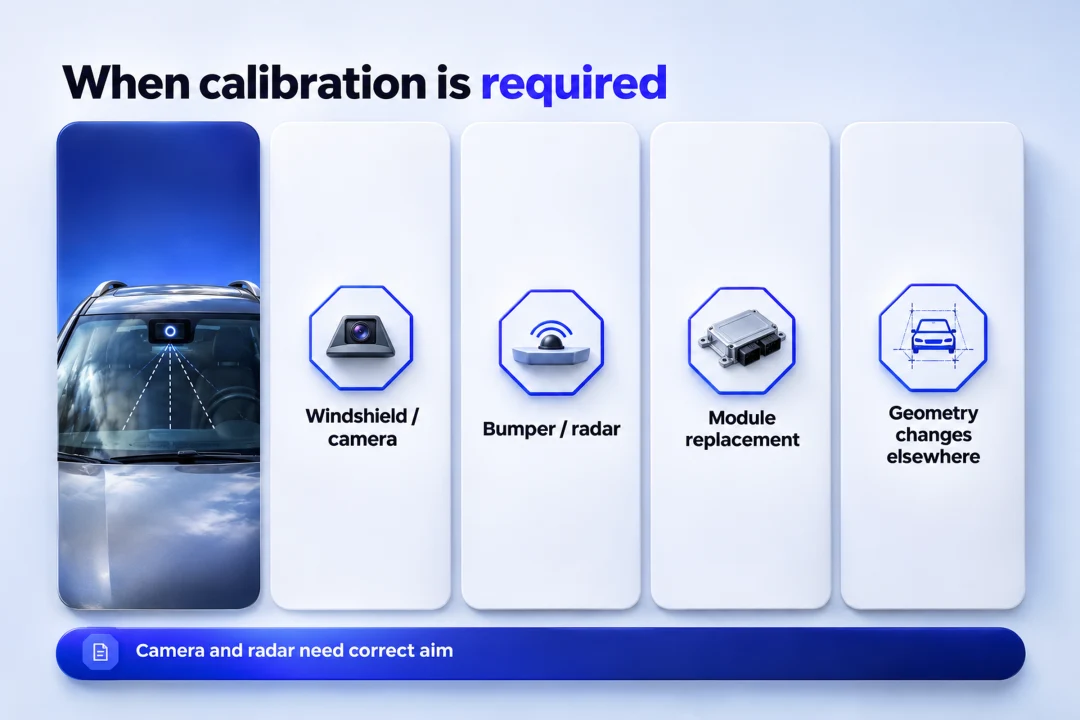
Common triggers for ADAS calibration after windshield replacement, bumper work, or repair:
| Trigger | Why calibration may be needed |
|---|---|
| Windshield replaced | Forward camera moved or glass optical properties changed — windshield camera calibration / front camera calibration |
| Front bumper / grille repair | Radar bracket aim changed — radar sensor calibration, adaptive cruise related |
| Camera or radar module replaced | New unit needs programming and aim |
| Some structural or suspension repairs done elsewhere | Geometry changes can affect aim (alignment itself is not our service) |
| Certain software or module replacements | Features may stay unavailable until calibration completes |
A related overview of post-repair relearns (including brief ADAS mention) is in relearn and calibration after repair or battery replacement. This article is the dedicated ADAS piece.
Static vs dynamic calibration — plain language
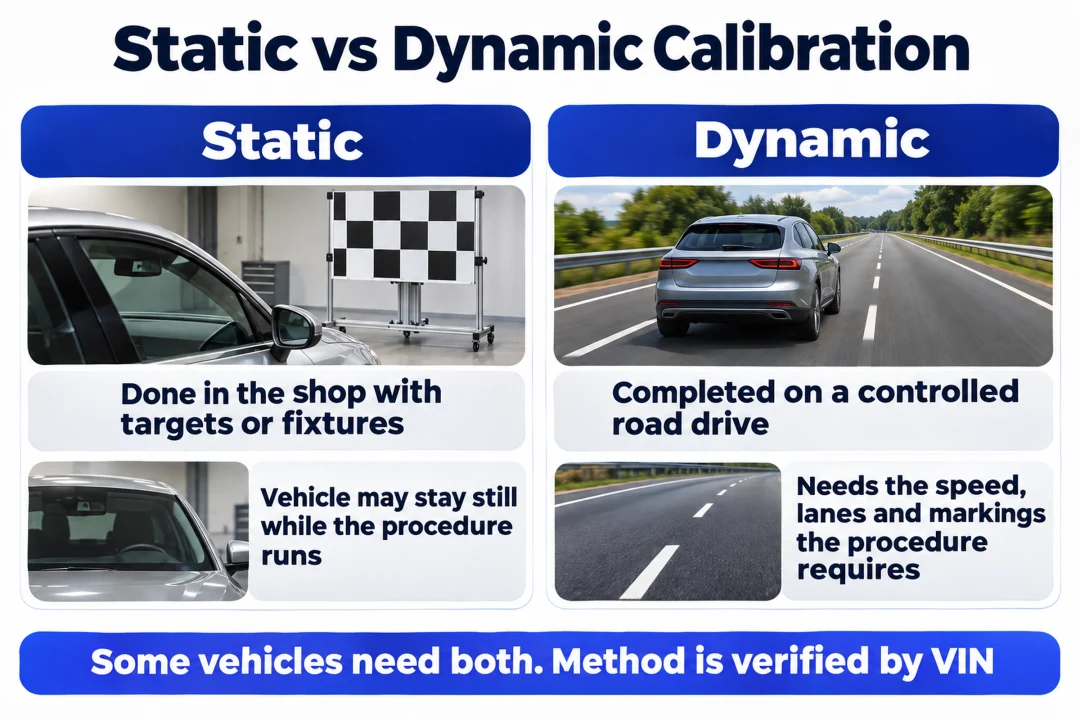
Manufacturers specify one or both:
- Static calibration: done in the shop with targets, patterns, or fixtures at measured distances and heights. The vehicle may stay still while the scan tool runs the procedure.
- Dynamic calibration: completed during a controlled road drive under conditions the procedure requires (speed, lanes, markings, sometimes traffic).
Some vehicles need static then dynamic; others need only one. Equipment brands and target kits vary — we do not spam brand names here. What matters is following the procedure for your VIN, not a generic YouTube sequence.
We do not promise “any car in one hour.” Time and method depend on the platform and whether targets, space, and road conditions allow the procedure to complete.
Symptoms of a missed calibration
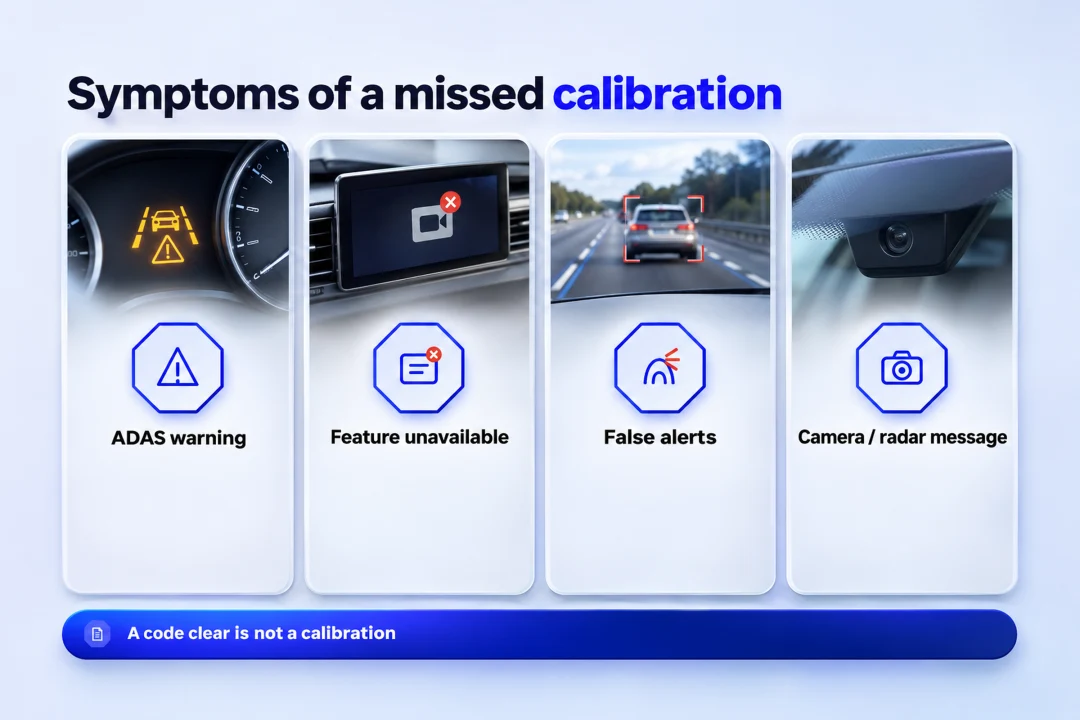
After glass or body work elsewhere, watch for:
- ADAS warning lights or messages (lane keep, collision alert, camera blocked, radar blocked);
- adaptive cruise, lane centering, or AEB unavailable;
- false alerts or features that behave oddly;
- related warnings among other dashboard warning lights.
If communication codes appear (modules offline), that may need electrical/network diagnosis first — see U0100 and car diagnostics.
Why a “code clear” is not a calibration
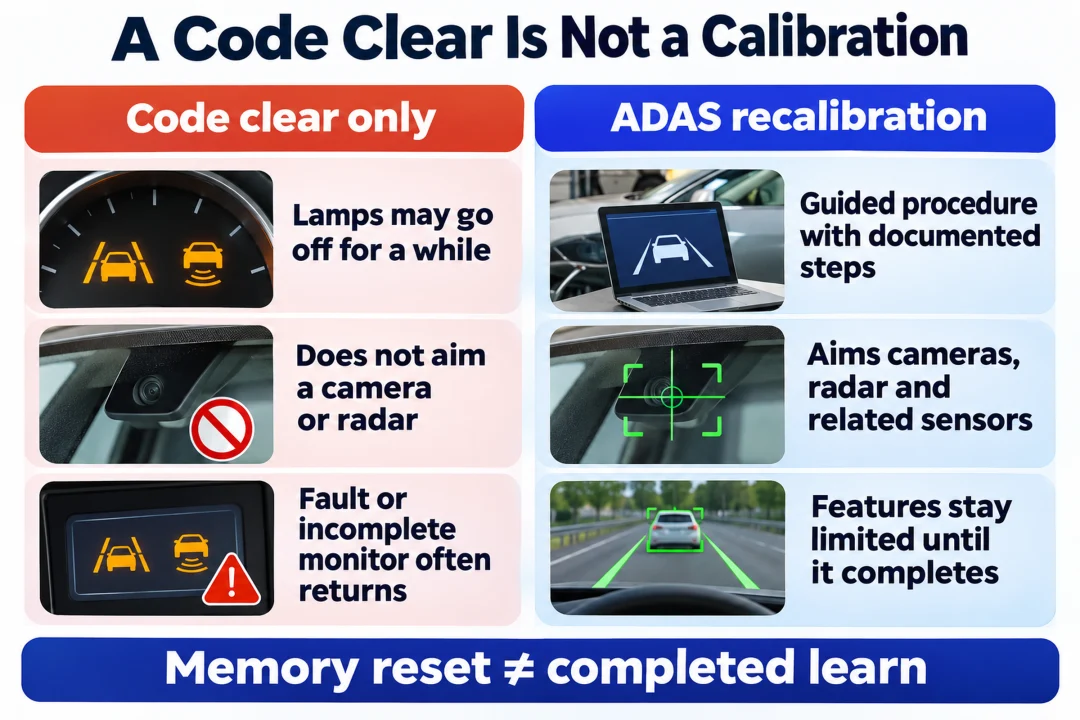
Clearing DTCs turns lamps off until the fault or incomplete calibration monitor returns. It does not aim a camera or radar. ADAS recalibration is a guided procedure with documented steps. Skipping it after windshield or radar work can leave safety features inaccurate or disabled.
Same idea as other relearns: memory reset ≠ completed learn.
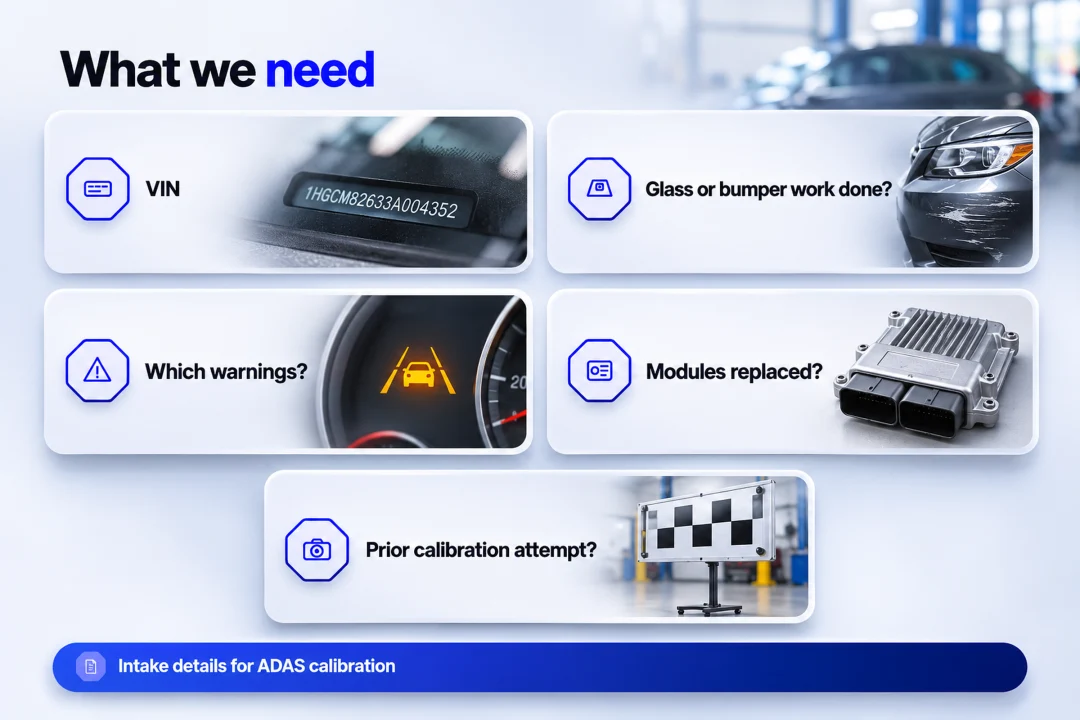
What we need
Before booking, gather:
- year, make, model, VIN;
- which glass or body work was done, and when;
- which warnings or unavailable features you see;
- whether a shop already attempted calibration;
- whether related modules were replaced.
Module programming context, when a replacement module is involved, is on our module programming page. Newer Audi, Mercedes, and BMW work is verified by VIN. There is no blanket list of excluded ADAS packages: coverage is decided by VIN for each vehicle.
Booking notes
We work in-shop only, by appointment. We do not replace windshields, do body repair, sell sensors, or perform alignments. Bring the car with a full charge on the 12-volt battery when possible; some procedures are sensitive to low voltage.
ADAS calibration FAQ
Do I need ADAS calibration after every windshield replacement?
On vehicles with a forward camera in the glass or bracket, manufacturer procedures usually require calibration after windshield replacement. Confirm for your VIN.
Is ADAS calibration the same as a wheel alignment?
No. Alignment sets suspension geometry. ADAS calibration aims sensors. An alignment done elsewhere can be a reason calibration is needed afterward; we do not perform the alignment itself.
Can you calibrate adaptive cruise control radar?
When the vehicle and our procedures support it, yes — after verifying the VIN and the work that was done. Not every radar system uses the same method.
Will clearing codes restore lane keep and AEB?
Usually not. Features often stay limited until a proper calibration completes.
Do you come to the glass shop?
No. Calibration is in-shop at our Englewood location, by appointment.
Next steps
Need ADAS calibration after a windshield or repair in the Englewood / Denver metro area? Book an appointment at our shop. See services and the related relearn / calibration guide.
This article is general information, not a guarantee that every ADAS package can be calibrated on every visit. Procedures are VIN-specific.