
P0171 Code: System Too Lean — What It Means and What to Check
A P0171 code means the engine computer has detected a lean condition on bank 1. In plain English, the control system sees a mixture with too much air relative to fuel and has reached its criteria for reporting that correction is not enough.
That does not identify a failed oxygen sensor, injector or intake component. This guide explains typical causes and symptoms, how P0171 differs from P0174, and what in-shop diagnosis checks. These are general patterns across applicable platforms, not a scan report or repair story from a particular customer's vehicle.
What a P0171 code means (system too lean, bank 1)
Bank 1 system too lean describes the monitored condition, not the part to replace. The engine computer uses exhaust feedback and other inputs to adjust fuel delivery. When the required correction meets the manufacturer's fault criteria, it can store the P0171 engine code.
Bank 1 is the cylinder bank containing cylinder 1; its physical location depends on the engine. An inline engine generally has one bank, while engines with two banks can report separate lean conditions. The service information for the actual vehicle determines the layout and test criteria.
The P0171 meaning remains broadly the same on applicable Chevrolet, Toyota and Ford vehicles, but the cause and diagnostic details vary. A brand name alongside a code is not enough to choose a repair.
P0171 vs P0174 (bank 1 and bank 2)
P0171 concerns bank 1; a P0174 code means bank 2 system too lean. The distinction helps the technician decide whether to investigate a bank-specific issue or a condition that could affect the engine more broadly.
When P0171 and P0174 appear together, a shared air-metering, intake or fuel-delivery issue becomes a useful branch to investigate. It does not automatically mean two oxygen sensors failed. When only one bank reports lean, local wiring, an injector problem or an air leak affecting that bank may deserve closer attention. These are starting points for tests, not rules that override the vehicle's data.
Typical symptoms of a lean condition
Possible P0171 symptoms include:
- a steady check engine light with little noticeable change in driving;
- rough or unstable idle;
- hesitation or reduced power under acceleration;
- difficult starting on some platforms;
- misfire symptoms when combustion becomes unstable.
A vehicle may show only the warning light. Equally, a rough idle alone does not prove a lean condition. Record when the complaint happens, such as cold startup, warm idle or acceleration, without trying to reproduce an unsafe loss of power.
See our check engine light guide for warning-light behavior. If misfire codes accompany the lean code, our P0300 guide explains that separate detection; a lean code and a misfire code are not interchangeable.
Common cause families (and what they are not)
Typical P0171 causes fall into several families:
- Unmetered air: an intake or vacuum leak can admit air that the control system did not properly account for.
- Fuel delivery: inadequate supply or an injector problem can leave too little fuel for the operating condition.
- Measurement and feedback: air-metering or exhaust-sensor information may need checking for accuracy; the code alone does not condemn either sensor.
- Electrical faults: damaged wiring, poor connections or ground problems can affect sensor information or injector operation.
An exhaust leak affecting feedback can also matter on applicable systems. Diagnosis selects the relevant branch instead of turning every possibility into a parts list. A lean code is not ordinarily a loose-gas-cap diagnosis; a large EVAP leak is a different monitored condition.
EVAP becomes relevant only when evidence shows a related purge-flow or hose fault affecting the mixture. eForce replaces injectors and repairs wiring and grounds when testing confirms those faults. Confirmed related EVAP valve or hose faults also fall within our services. We do not present every possible mechanical, pump or sensor repair as an established shop service: we identify the cause and explain the next step.
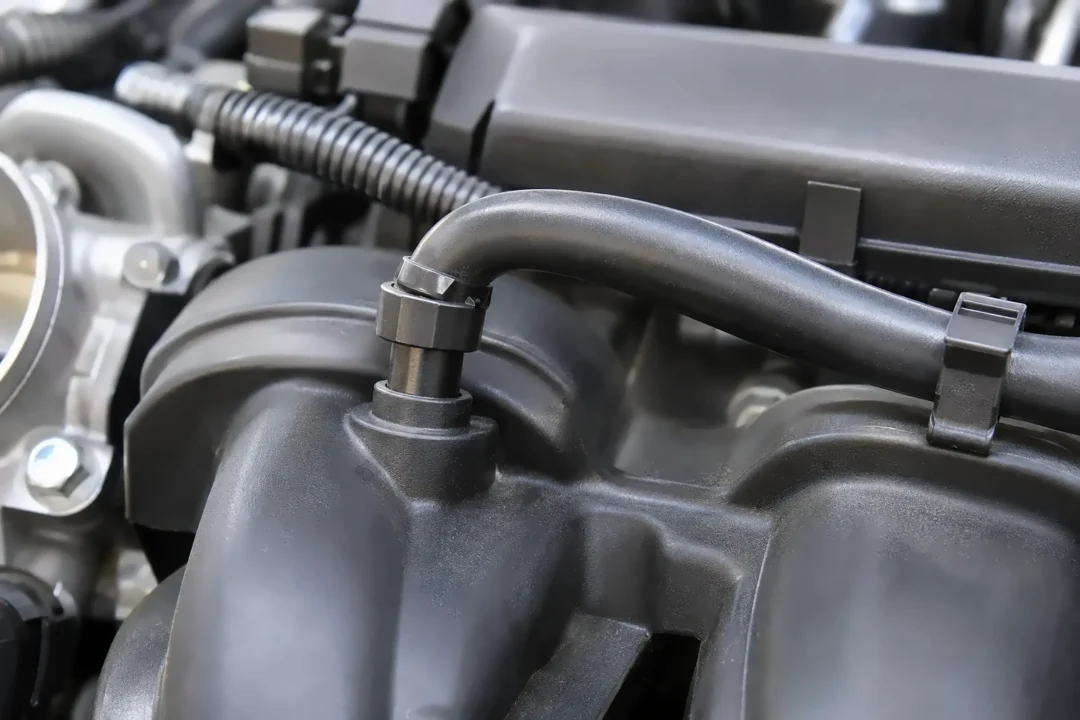
Illustrative inspection of possible cause areas; no failed component is implied.
Why a code clear or a random parts swap does not fix P0171
Clearing the code removes stored information, not the condition that triggered it. It can also erase useful context before diagnosis. A light that stays off briefly after clearing is not proof that the mixture problem has been repaired.
Short term fuel trim is the computer's immediate fuel adjustment. Long term fuel trim is a learned correction that persists beyond momentary changes. Positive corrections generally mean fuel is being added relative to the base calculation. Their pattern under different conditions helps explain the lean fuel trim complaint, but a single number without operating context cannot choose a component.
That is why a P0171 fix starts with evidence. An oxygen sensor may be reporting the condition correctly, and replacing it leaves the underlying fault unchanged. Cleaning a MAF is not a universal answer either.
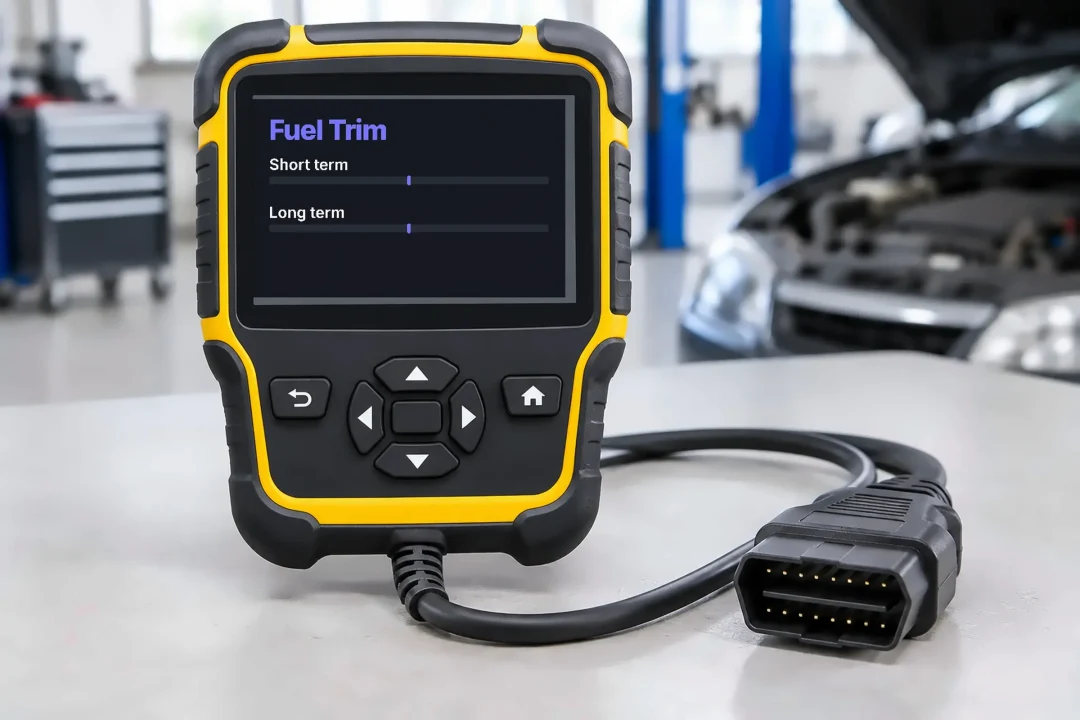
Illustrative fuel-trim display, not measurements from a customer's vehicle.
How we diagnose a P0171 (or P0174) in the shop
At eForce Automotive Service, car diagnostics connects the code to the operating conditions:
- Scan and preserve context: read related codes and freeze-frame information before deciding what needs testing.
- Review live fuel corrections: compare the banks and relevant operating conditions using platform-specific information.
- Investigate unmetered air: check suspected intake or vacuum paths using appropriate shop equipment.
- Evaluate fuel and injector operation: follow the evidence rather than assuming that a lean code names an injector.
- Verify electrical integrity: inspect affected connectors, wiring and grounds, then confirm the result after the appropriate repair.
Circuit-related work is covered under auto electrical repair. We explain what testing supports and which next steps fit the confirmed fault. This process description is not a home fuel-system or intake-testing procedure.
Book by the phone number in the site header. We work in-shop only, by appointment, at 1713 W Baltic Pl, Englewood, CO 80110. See our services and service area.
FAQ
What does a P0171 code mean?
It means system too lean on bank 1. The computer detected a condition requiring excessive fuel correction, but the code does not identify one failed part.
Is P0171 the same as P0174?
No: P0171 concerns bank 1, while P0174 concerns bank 2. Both together can point the investigation toward a shared cause.
Can I keep driving with a P0171 code?
The code alone cannot establish that driving is safe. If the light flashes, the engine shakes badly, loses power or stalls, stop somewhere safe and arrange diagnosis rather than continuing the trip.
What typically causes a system too lean code?
Possible families include unmetered air, inadequate fuel delivery, inaccurate sensor feedback and electrical faults. Tests determine which applies to the vehicle.
Will replacing an oxygen sensor or cleaning a MAF fix P0171?
Only a confirmed fault can justify that particular action. Neither is a reliable default remedy for a lean code.
How do I book diagnosis for a P0171 in Englewood?
Call the number in the site header for an in-shop appointment. Mention any related codes, warning-light behavior and when the symptoms occur.
General information, not a diagnosis of your vehicle. Fuel systems and running engines require appropriate equipment and professional precautions.