
P0335 Code: Crankshaft Position Sensor Symptoms and Diagnosis
Crankshaft position sensor symptoms can include a no-start, an unexpected stall or an intermittent check engine light. A P0335 code points the investigation toward the crankshaft position sensor circuit. It does not automatically prove that buying a new sensor will solve the problem.
The sensor is one part of a signal path that also includes wiring, connections and the engine computer. This guide explains typical patterns on applicable platforms, how crankshaft and camshaft codes differ, and how diagnosis narrows the cause. It is general information, not findings from a particular customer's car.
What a P0335 code means
The crankshaft position sensor, or CKP sensor, provides information about crankshaft position and speed. The engine computer uses this information to coordinate engine operation, including ignition and fuel injection. An unreliable or missing signal can prevent normal starting or running.
P0335 typically identifies a crankshaft position sensor A circuit malfunction. The exact setting conditions and circuit layout depend on the platform. The fault may involve the sensor, its signal path, a supply or ground where fitted, or damaged connections. Different sensor designs require different checks; there is no single wiring assumption that fits every vehicle.
The code is therefore a direction for diagnosis, not a verdict on the part. Vehicle-specific service information matters before a technician interprets a reading or chooses a replacement.
Typical crankshaft position sensor symptoms
Possible bad crank sensor symptoms include:
- the engine cranks but does not start;
- a stall, sometimes followed by a restart after the condition changes;
- uneven idle or hesitation;
- misfire symptoms;
- a check engine light, with or without an obvious driving complaint.
These are typical possibilities, not an obligatory combination. Heat, vibration or a disturbed connection can make the complaint intermittent. An engine that starts normally during a later check does not erase the earlier fault, but it may make reproducing it more important.
If the car stalls or shuts off while driving, do not keep driving to test whether it happens again. A check engine light needs its codes and operating context checked. When separate misfire codes appear, our P0300 guide explains that different finding without assuming the crank sensor caused it.
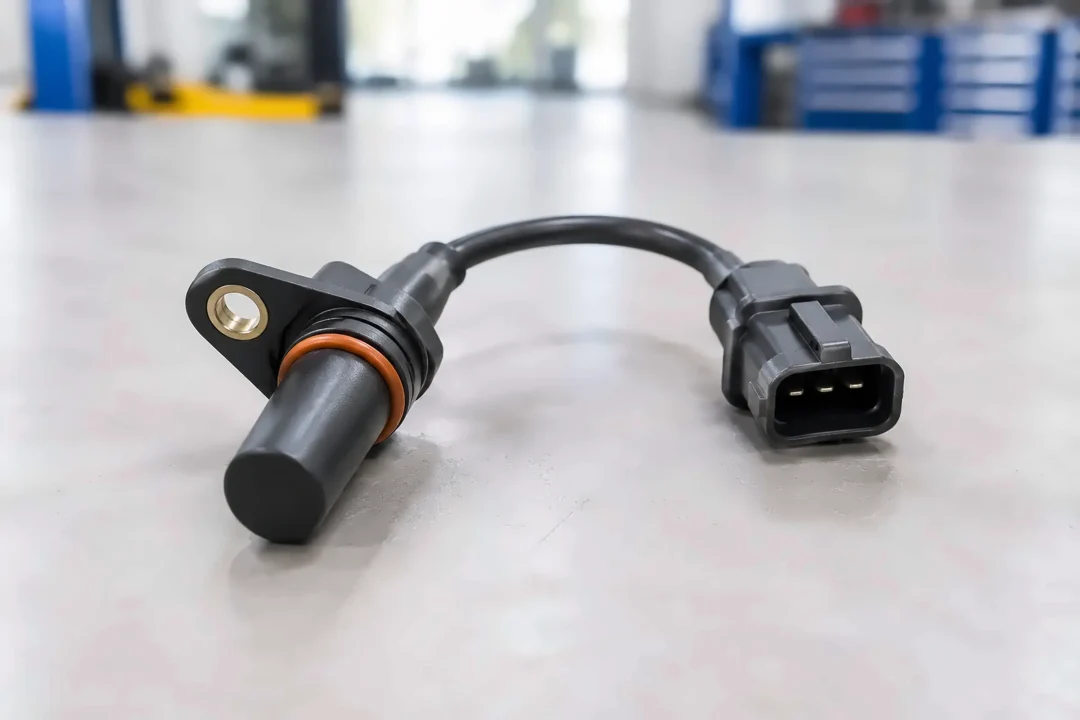
Illustrative CKP component inspection; mounting position varies by engine.
P0335 vs P0340 (crankshaft vs camshaft position sensor)
The crankshaft sensor reports crankshaft position and speed. A camshaft position sensor, or CMP sensor, supplies camshaft position information that helps the computer identify the engine's operating phase. The two signals are related, but their circuit codes are not interchangeable.
P0340 typically concerns the camshaft position sensor A circuit, bank 1 or a single sensor, depending on the engine. Possible camshaft position sensor symptoms overlap with CKP complaints: starting difficulty, rough running or a check engine light. Symptoms alone cannot reliably distinguish them.
A P0336 code belongs to the CKP range/performance family. A P0345 code typically concerns the camshaft sensor A circuit on bank 2. Exact definitions and supported banks must be checked for the vehicle, rather than applied to every engine.
Cam/crank correlation and variable-valve-timing faults are another diagnostic branch. Our WRX AVCS/VVT article concerns that different family; a timing-related description does not make it equivalent to P0335.
Why replacing the sensor first often fails
A new sensor cannot repair an open wire, loose terminal or damaged connector. A problem with an applicable power supply or ground can also disrupt the signal, even if the sensor itself is serviceable. Our voltage drop and bad ground guide explains why appearance alone does not prove a circuit is healthy.
The signal also depends on the rotating target, often called a reluctor or tone wheel, and the correct installation relationship. A damaged target or incorrect mounting can create a signal problem that another sensor will not correct. A control-module fault is another possible branch, but it should not be assumed before the surrounding circuit is verified.
A prior sensor replacement is useful history, not proof that the remaining possibilities are exhausted. The technician still needs to establish whether the component, installation and signal path work together correctly.
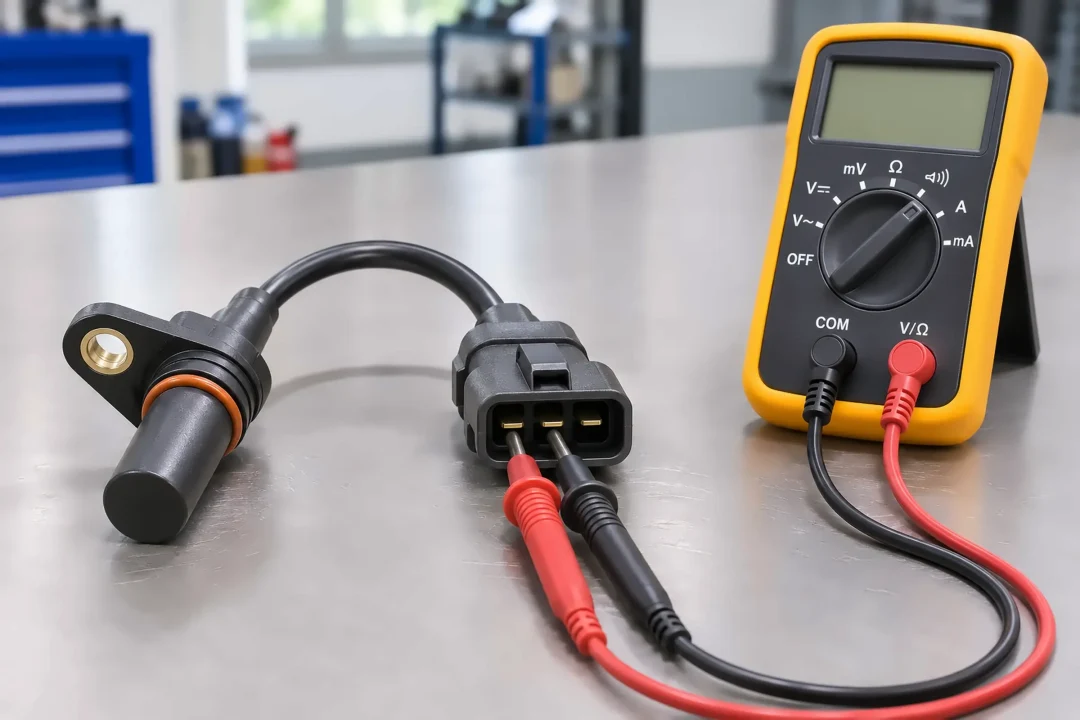
Illustrative professional circuit inspection; no customer readings are shown.
How we diagnose a P0335 (and related cam sensor codes)
At eForce Automotive Service, car diagnostics starts with the complaint and the vehicle's specific circuit information:
- Read the full code picture: preserve related codes and freeze-frame context, including whether the complaint is intermittent.
- Review relevant data: compare reported engine speed and synchronization information where the platform supports them.
- Inspect the circuit: check connectors and harness areas for damage, contamination, poor terminal contact or previous repair issues.
- Verify the electrical path: test applicable supply, ground and signal integrity using methods suited to the sensor design.
- Choose the next step from evidence: consider the sensor, installation or rotating target only as supported by the results, then verify operation after the appropriate repair.
These are professional diagnostic stages, not instructions for working around a rotating engine. Our confirmed auto electrical repair work includes wiring and grounds. Sensor replacement may be the appropriate next step when testing confirms a failed sensor; it is not the starting assumption or a promise that every code needs one.
Book by the phone number in the site header. We work in-shop only, by appointment, at 1713 W Baltic Pl, Englewood, CO 80110. See our services and service area.
Crank / no-start: when this code is only part of the picture
An engine that cranks but will not start needs more than a code-name guess. A CKP fault may explain the complaint, but other faults or stored history can coexist. Our no-start guide covers the wider starting-system picture; this article stays focused on CKP and related sensor circuits.
FAQ
What does a P0335 code mean?
It typically means a crankshaft position sensor A circuit malfunction. The sensor, wiring, connections and applicable electrical supplies need checking before a component is condemned.
What are typical crankshaft position sensor symptoms?
Possible symptoms include a no-start, stalling, rough idle and a check engine light. They can be intermittent and can overlap with other faults.
Is P0335 the same as a P0340 camshaft position sensor code?
No: P0335 concerns the crankshaft sensor circuit, while P0340 concerns a camshaft sensor circuit. Similar symptoms do not make them the same diagnosis.
Can I drive with a P0335 code?
A loss of the CKP signal can cause a no-start or stall. Do not assume the car is safe to keep driving, especially if it has already cut out; stop safely and arrange diagnosis.
Will a new crankshaft position sensor always fix P0335?
No: circuit damage or a target or installation problem can remain after replacement. A new sensor is justified only when the tests support it.
How do I book diagnosis for a P0335 in Englewood?
Call the number in the site header to arrange an in-shop appointment. Mention whether it fails to start, stalls or has already had sensor work.
General information, not a diagnosis of your vehicle. Sensor and signal tests around running engines require appropriate equipment and professional precautions.