
Signs of a Bad Alternator: Symptoms, Causes and What to Check
Bad alternator symptoms can look like a weak battery at first: a slow start, dim lights or electronics that reset. The important difference is what happens while the engine runs. A charging fault can leave the battery supplying power without enough replenishment, until the next start fails or the engine stops.
No single symptom proves that the alternator is bad. This guide describes typical charging-system patterns, not findings from a particular customer's car. At eForce Automotive Service in Englewood, diagnosis separates the alternator from the battery, wiring and other possible causes before repair is discussed.
Signs of a bad alternator (what drivers usually notice first)
Typical signs of a bad alternator include several changes that may appear together or come and go:
- Dim or flickering lights: headlights or interior lighting change brightness while the engine runs.
- A battery that goes weak again: recharging or replacing it does not explain why it keeps losing charge.
- A charging warning: the battery symbol remains on after startup or appears during a drive.
- Whining or squealing: an alternator whining noise may come from the unit, but a belt or another driven component can sound similar.
- A burning smell: overheated wiring or a slipping belt needs attention, not a guessed part.
- Unstable electronics: displays reset, windows slow down or several systems behave oddly.
- A difficult restart after a short trip: the battery may not have recovered enough charge, although battery condition also matters.
These are possible failing alternator symptoms, not a checklist every vehicle follows. Broader car electrical problem symptoms can help you describe what changed without deciding which component failed.
Bad alternator vs a failing battery
The battery vs alternator distinction starts with their jobs. The battery supplies the heavy electrical demand needed to start the engine. With the engine running, the alternator supplies electrical power and replenishes the battery, within the vehicle's charging-control strategy.
A failing battery may struggle to hold or deliver charge even when charging output is correct. An alternator not charging properly can leave a healthy battery depleted. Both faults can exist together, especially after repeated discharge, so one passing result does not settle the whole system.
When comparing signs of a bad car battery vs alternator, timing matters more than the battery's age alone. Trouble while parked suggests a different diagnostic branch; see why a battery keeps dying overnight. A vehicle that already will not start needs the broader no-start guide, rather than an assumption that the alternator caused it.
Warning lights and codes (including P0562)
A battery symbol or charging system light warns about charging-system operation, not simply battery health. The lamp's behavior and the owner's manual matter; our battery light guide explains those warning patterns without treating every illuminated symbol as an alternator verdict.
This low-voltage code typically means system voltage low. It records a low-voltage condition, not proof that the alternator itself failed; battery condition, connections and circuit faults remain possible. Several modules may also react to low voltage, producing multiple dashboard warnings. Codes are clues to test, not a parts order.
Why a parts-store battery test is not an alternator diagnosis
A battery test can provide useful information about the battery at that moment. It does not automatically establish charging output under different loads, locate resistance in a cable or reproduce a heat-related intermittent fault.
The charging path includes the alternator, its drive belt, control circuits, connections and grounds. Charging behavior also varies by platform and operating conditions. A simple pass/fail result should not replace checking the whole circuit, particularly when symptoms continue. Disconnecting a battery with the engine running is not a safe diagnostic shortcut and can damage electronics.
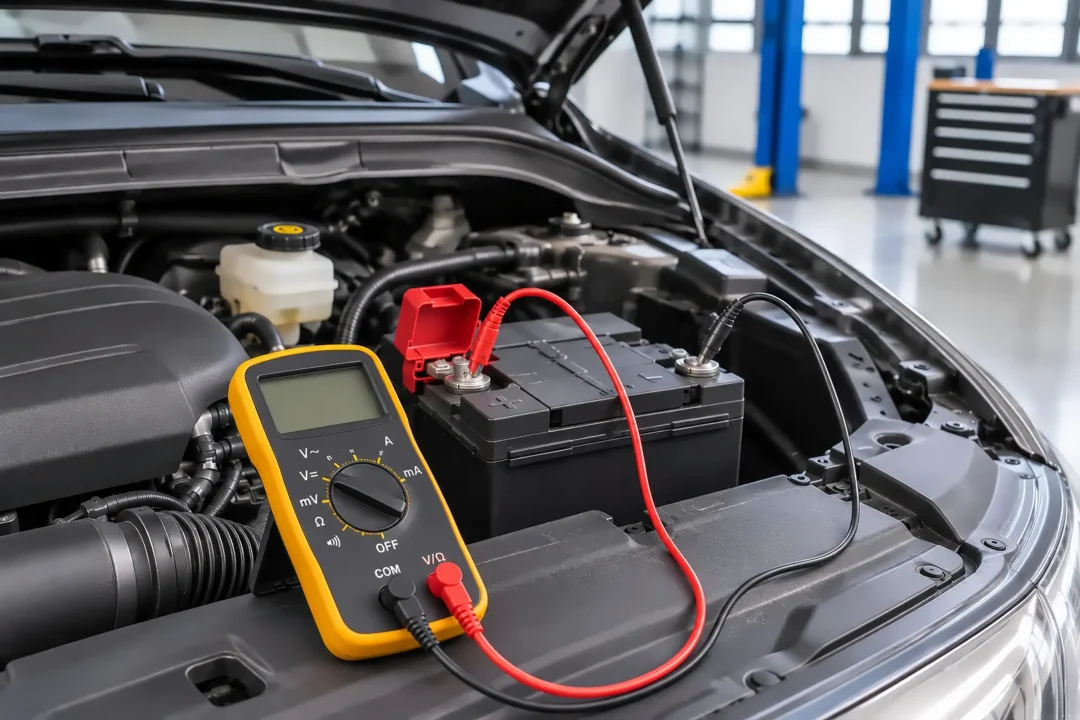
Illustrative in-shop test; equipment readings are not a customer diagnosis.
How we diagnose a charging problem in the shop
Our car diagnostics approach follows the evidence:
- Confirm the complaint: when it happens, which warnings appear and whether recent battery or electrical work changed anything.
- Assess battery condition: a discharged battery and a failed battery are not automatically the same finding.
- Evaluate charging output: compare operation under appropriate conditions with the platform's requirements.
- Inspect the drive and electrical path: check the belt, terminals, charging wiring and grounds as relevant.
- Compare codes and live data: use the vehicle's charging information to guide further testing and verify the result after repair.
A connection can look clean yet lose voltage under load. Our voltage drop and bad ground guide explains why those tests matter. Confirmed circuit faults belong under auto electrical repair.
We diagnose and repair alternators; the alternator service page explains that work. The repair recommendation follows diagnosis, rather than assuming every charging complaint needs the same solution.
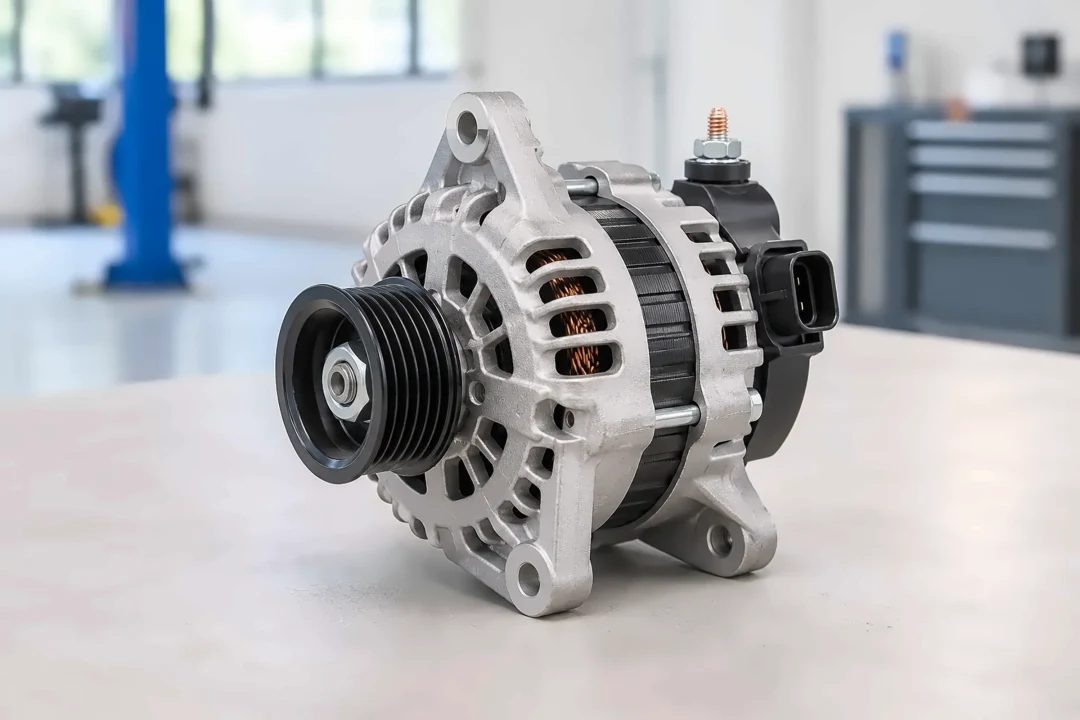
Illustrative component inspection, not a claimed customer repair.
What to do if you notice these symptoms
Note when the symptoms appear and whether they change with temperature, engine speed or electrical use. Do not assume that a successful jump-start makes another drive safe. If lights weaken, a burning smell develops or the engine falters, stop somewhere safe rather than testing how far it will go.
If the car is already stalling or shutting off while driving, charging is only one possible cause. Arrange diagnosis without continuing to drive a vehicle that stalls.
Book by the phone number in the site header. We work in-shop only, by appointment, at 1713 W Baltic Pl, Englewood, CO 80110. Review our services and service area for shop information.
FAQ
What are the most common signs of a bad alternator?
Typical signs include dim or flickering lights, a recurring weak battery, charging warnings and unstable electronics. Noise or a burning smell can also occur, but none of these identifies the alternator without testing.
How do I tell a bad alternator from a bad battery?
Both can cause weak starting. Battery condition and charging-system operation need separate checks, followed by connection and circuit tests when indicated.
Can a car run with a failing alternator?
It may run temporarily on stored battery power. There is no dependable remaining driving time, and the engine can stall as voltage falls.
What does a P0562 code mean?
It typically means system voltage low. Diagnosis must establish why voltage dropped instead of treating the code as proof of a failed alternator.
Will a new battery fix alternator symptoms?
Not if inadequate charging caused the battery to discharge. A replacement battery does not correct a failed alternator or a damaged charging connection.
How do I book alternator diagnosis in Englewood?
Call the number in the site header to arrange an in-shop appointment. Have your vehicle details and a short description of the symptoms ready.
General information, not a diagnosis of your vehicle. Charging faults can lead to a no-start or stall; seek a safe stopping place if symptoms worsen.