
P0172 Code: System Too Rich — What It Means and What to Check
A P0172 code means the engine computer has detected that the engine is running too rich on bank 1: there is more fuel relative to air than the system can correct for. The computer keeps pulling fuel out to compensate and, when that correction reaches its limit, it stores the code.
P0172 describes a condition, not a part. A leaking injector, an incorrect air measurement, an EVAP purge problem, fuel pressure or sensor feedback can all lead to it. This guide explains what P0172 typically means, the symptoms of a rich condition, how it differs from P0171 and the bank 2 codes, the common cause families and how diagnosis narrows the cause. It describes typical patterns, not findings from a particular customer's car.
What a P0172 code means (system too rich, bank 1)
System too rich bank 1 is the scan tool wording for P0172. Bank 1 is the side of the engine that contains cylinder 1; inline engines have only one bank.
The engine computer adjusts fuel delivery constantly using feedback from exhaust oxygen sensors. That adjustment is called fuel trim. When the mixture runs rich, the computer subtracts fuel, which shows up as a negative fuel trim. A short-term trim reacts quickly; a long-term trim is a learned correction that builds up over time. When the correction needed stays beyond the manufacturer's limit, P0172 is stored.
The code says the mixture is rich on that bank. It does not say why, and there is no single cause that applies to every vehicle.
Typical symptoms of a rich condition
Possible running rich symptoms with P0172 include:
- a check engine light, often with no other complaint at first;
- higher fuel use;
- a fuel smell from the exhaust;
- rough or unstable idle;
- hard starting, especially when the engine is warm;
- black soot at the tailpipe on some vehicles;
- misfires in some cases, when excess fuel affects combustion.
Not every car shows all of these. A long-running rich condition can also put extra stress on the catalytic converter; our P0420 guide explains what a catalyst efficiency code means. For warning light basics, see our check engine light guide.
P0172 vs P0171, and P0174 / P0175
P0171 is the opposite condition on the same bank: too lean, with too much air or too little fuel. Our P0171 system too lean guide covers that code. The two share the same fuel trim logic but usually lead to different cause families.
On engines with two banks, P0174 means too lean on bank 2, and P0175 means too rich on bank 2. P0175 follows the same logic as P0172.
When P0172 and P0175 appear together, a cause that affects both banks becomes a useful direction, such as air measurement or fuel pressure. When only one bank is rich, something that affects only that side, such as a leaking injector, deserves closer attention. These are typical starting points for tests, not rules.
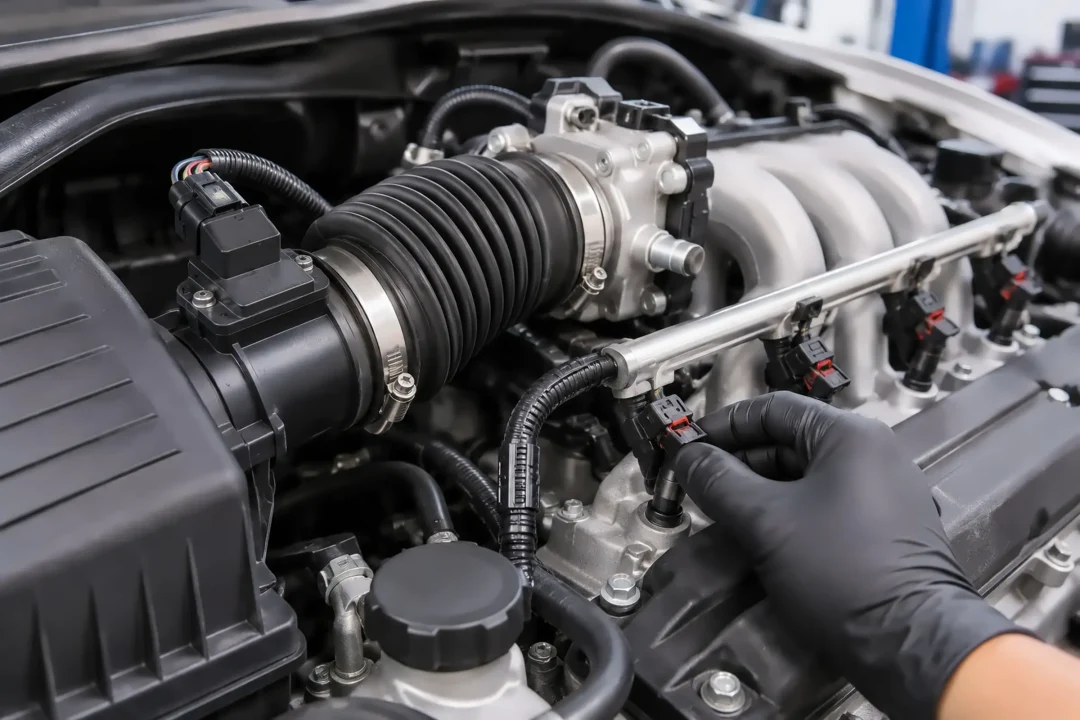
Illustrative in-shop inspection; not a customer's vehicle.
Common cause families for a P0172
Typical P0172 causes fall into several families:
- Leaking fuel injector. An injector that drips or does not close fully adds fuel the computer did not command.
- Air measurement. If the mass air flow (MAF) sensor reports more air than is actually entering, the computer adds too much fuel.
- EVAP purge. A purge valve that stays open can let fuel vapor into the intake when it should not.
- Fuel pressure. Pressure that is higher than specified can push extra fuel through the injectors.
- Sensor feedback. An oxygen sensor or its circuit giving a misleading signal can make the computer correct in the wrong direction.
- Wiring and grounds. Damaged wiring or poor grounds on sensors or injectors can distort signals or injector operation.
At our shop, we repair injectors, wiring and grounds when tests confirm them. Air measurement, vacuum and fuel pressure or fuel pump issues are checked as part of diagnosis: we identify them and explain the next step. Mechanical engine problems are named as a diagnostic branch when tests point there.
Why replacing an O2 sensor or a set of injectors often fails
P0172 tells you the mixture is rich, not which part caused it. An oxygen sensor that reports a rich mixture is often doing its job correctly, so replacing it leaves the real cause in place. Replacing a full set of injectors without proving that one leaks has the same risk.
Clearing the code is not a repair either. It erases freeze frame data and resets learned fuel trims, so the light may stay off for a while and then return.
How we diagnose a P0172 in the shop
At eForce Automotive Service, car diagnostics for a rich code follows the evidence:
- Scan and freeze frame. We read all codes, including misfire, MAF, oxygen sensor and EVAP codes, and the conditions when P0172 set.
- Fuel trim and live data. We compare short- and long-term fuel trim, banks and operating conditions using platform-specific information.
- Check each cause family. We evaluate air measurement, EVAP purge behavior, fuel pressure and injector operation with appropriate shop equipment.
- Circuits. We test sensor and injector wiring, connectors and grounds. Circuit faults are repaired under auto electrical repair.
- Explain, then repair. We repair what is confirmed within our services, and explain findings for anything outside them.
Fuel systems operate under pressure. Testing fuel pressure or disconnecting sensors to see what happens is not a home procedure.
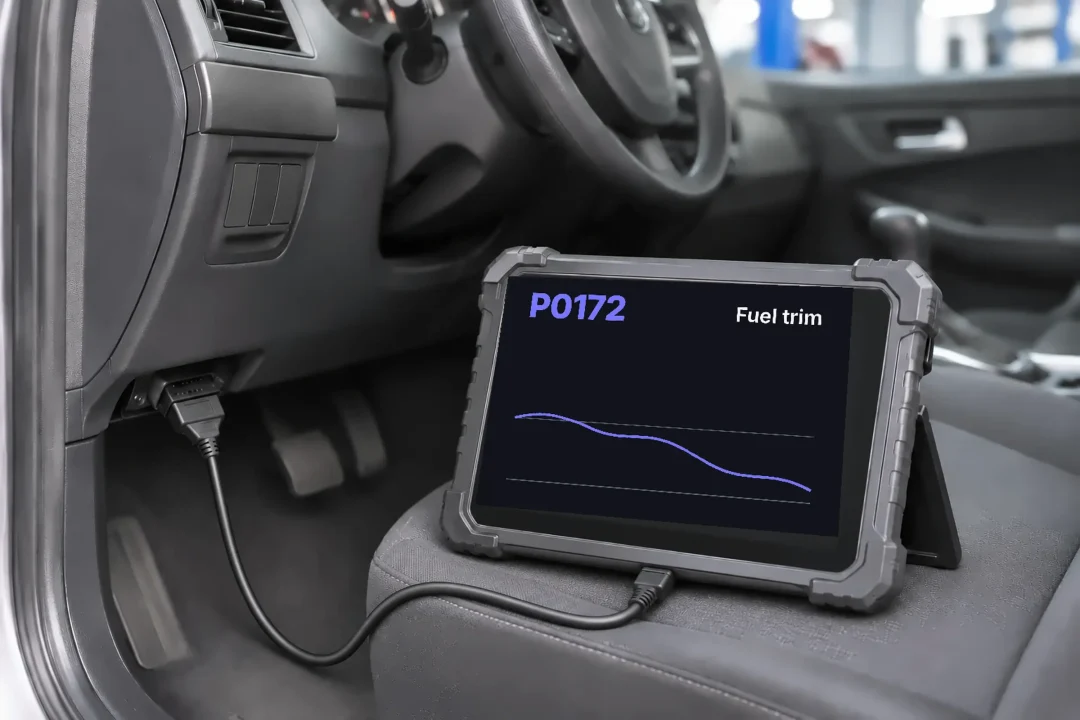
Illustrative scan tool screen; not data from a customer's vehicle.
Book through the phone number in the site header. We work in-shop only, by appointment, at 1713 W Baltic Pl, Englewood, CO 80110. See our services and service area.
FAQ
What does a P0172 code mean?
It means the engine is running too rich on bank 1: the computer has had to remove more fuel than its limit allows. The code describes the condition, not the failed part.
Is P0172 the same as a P0171 system too lean?
No. P0171 means too lean on bank 1, and P0172 means too rich on bank 1. They use the same fuel trim logic but usually point to different causes.
What typically causes a P0172?
Typical cause families are a leaking injector, incorrect air measurement, an EVAP purge valve that stays open, high fuel pressure, misleading sensor feedback and wiring faults. Testing decides which one applies.
What is a P0175 code?
P0175 means too rich on bank 2, on engines that have two banks. It follows the same logic as P0172, and the two together can point toward a shared cause.
Will a new oxygen sensor or fuel injector always fix P0172?
No. A new part fixes the code only when that part caused the rich condition. The oxygen sensor is often reporting the problem correctly.
How do I book diagnosis for a P0172 in Englewood?
Call the number in the site header to set an in-shop appointment. Mention all stored codes and any fuel smell or change in fuel use.
General information, not a diagnosis of your vehicle. Fuel systems operate under pressure and fuel is flammable; leave testing to properly equipped technicians.