
P0340 Code: Camshaft Position Sensor Symptoms and Diagnosis
A P0340 code means the engine computer has detected a problem in the camshaft position sensor circuit. Typical camshaft position sensor symptoms include a check engine light, a long or difficult start, stalling and, on some vehicles, a no-start.
The code points to a circuit, not automatically to a dead sensor. The sensor, its connector, wiring, power and ground, or the signal itself can all be involved. This guide explains what P0340 typically means, the common symptoms, how it differs from the crankshaft sensor code P0335, the related codes in the same family and how diagnosis narrows the cause. It describes typical patterns, not findings from a particular customer's car.
What a P0340 code means (camshaft position sensor circuit)
The camshaft position sensor, often called the CMP sensor, reports the position of a camshaft to the engine computer. Together with the crankshaft position signal, it helps the computer know which stage each cylinder is in, so it can time fuel injection and, on many engines, ignition and valve timing control.
P0340 typically reads as "camshaft position sensor A circuit, bank 1 or single sensor." The computer sets it when the expected signal is missing, out of range or not plausible during its checks. The exact conditions and circuit layout depend on the platform.
Possible causes include the sensor, a damaged connector or terminal, an open or shorted wire, a power supply or ground problem, or a signal problem caused by something mechanical. The code alone does not say which, and there is no single cause that applies to every vehicle.
Typical camshaft position sensor symptoms
Possible bad camshaft position sensor symptoms include:
- a check engine light, sometimes with no other complaint;
- a long crank before the engine starts, or hard starting when hot;
- stalling, sometimes followed by a restart;
- rough running, hesitation or misfires;
- reduced power on some vehicles;
- in some cases, a crank-no-start.
Not every vehicle shows all of these. Many engines can keep running with a missing cam signal by using backup logic, while others may not start. Heat and vibration can make the fault come and go.
If the car stalls while driving, do not keep driving to test it; our stalling guide covers safe next steps. If a power warning appears, see the reduced engine power guide. For general warning light behavior, see our check engine light guide.
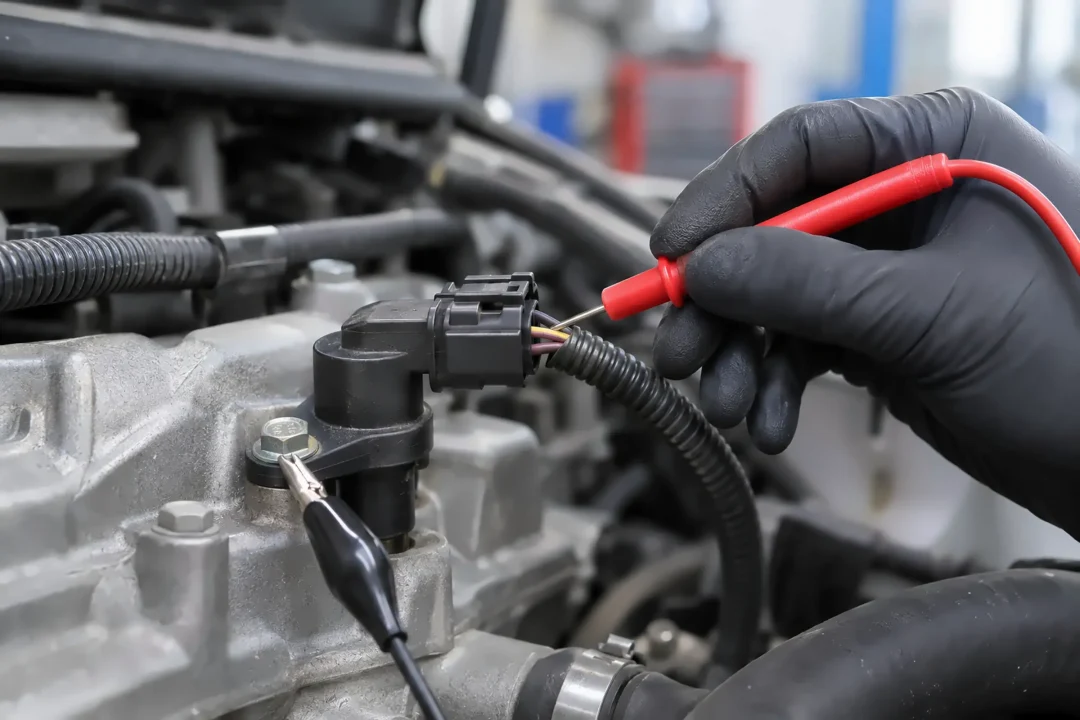
Illustrative in-shop inspection; sensor location varies by engine.
P0340 vs P0335 (camshaft vs crankshaft)
The camshaft sensor reports camshaft position. The crankshaft sensor reports crankshaft position and speed. Both signals are used together for engine timing, but they come from different sensors with different circuits, and they set different codes. P0335 typically points to the crankshaft position sensor A circuit.
Searches for "camshaft and crankshaft sensor symptoms" treat them as one problem, but they are diagnosed separately. Symptoms overlap, so the stored code and testing decide which circuit to follow.
Related codes: P0341, P0344 and P0345
P0340 belongs to a family of camshaft sensor codes:
- P0341 typically means the sensor A signal is out of the expected range or performance, for example present but not plausible.
- P0344 typically means the sensor A signal is intermittent.
- P0345 typically means a camshaft position sensor A circuit fault on bank 2, on engines that have two banks.
Exact definitions and which sensor is "A" depend on the manufacturer, so the vehicle's service information decides the details. The diagnostic logic is similar for the whole family: confirm the circuit, then the signal, then the sensor. Searches often pair P0340 with a brand such as Nissan, Chevy, Ford or Toyota; the code definition is broadly the same, but sensor location and test values vary.
Why replacing the sensor alone often fails
A new sensor cannot repair a corroded terminal, a broken wire, a shorted circuit or a missing power supply or ground. Those faults are common reasons a P0340 returns after a parts-store sensor goes in. Our voltage drop and bad ground guide explains why a connection can look fine and still fail under load.
The signal also depends on mechanical parts, such as the target the sensor reads and the relationship between camshaft and crankshaft timing. A damaged target or a timing issue can create a signal problem that another sensor will not correct. We treat that as a diagnostic branch: we identify it and explain the next step.
Cam/crank timing correlation codes and variable valve timing faults are a related but different family; they are not the same as a P0340 circuit fault.
How we diagnose a P0340 in the shop
At eForce Automotive Service, car diagnostics for a cam sensor code follows the circuit:
- Scan and freeze frame. We read all stored codes, including crankshaft, timing and misfire codes, and the conditions when P0340 set.
- Live data. Where the platform supports it, we check whether the computer sees the cam signal and whether it stays in sync with the crank signal.
- Circuit checks. We test the sensor's power supply, ground and signal wire, and inspect the connector and harness for damage, corrosion or poor terminal fit.
- Signal evaluation. We check the signal pattern with suitable shop equipment when needed.
- Explain, then repair. Connector, wiring and ground faults are repaired under auto electrical repair. If the sensor itself or a mechanical cause is confirmed, we explain the finding and the next step.
These are professional steps. Do not try to start or run an engine with sensors disconnected as a test.
If the car cranks but does not start, a P0340 is only one possible cause. Our no-start guide covers battery, starter and immobilizer branches.
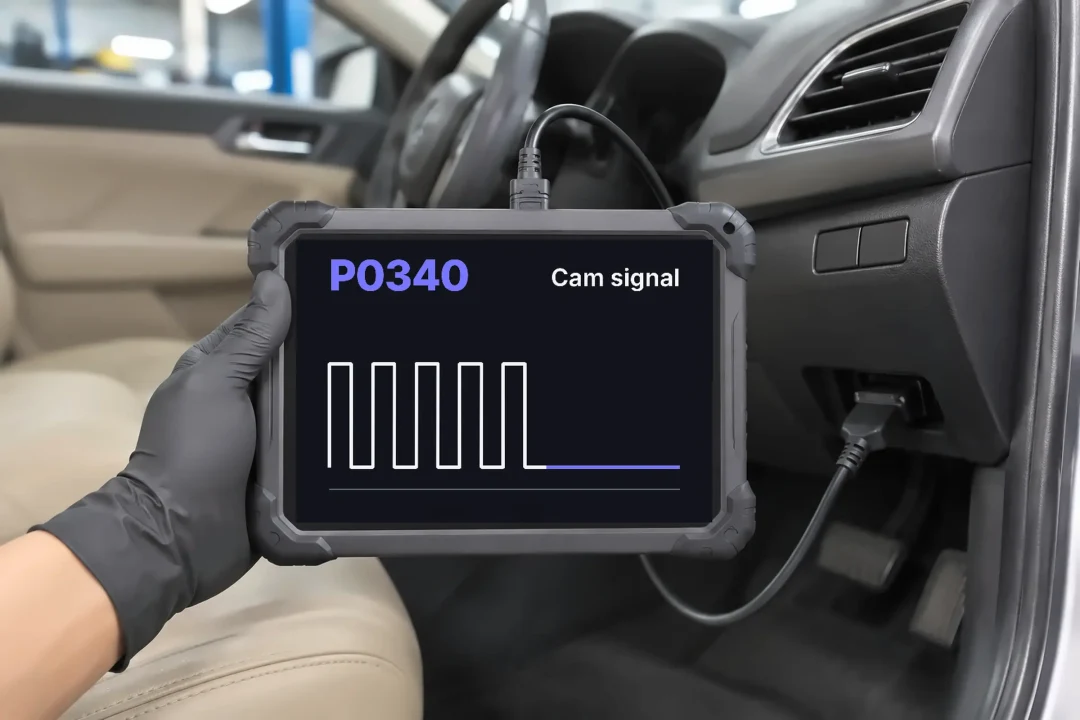
Illustrative scan tool screen; not data from a customer's vehicle.
Book through the phone number in the site header. We work in-shop only, by appointment, at 1713 W Baltic Pl, Englewood, CO 80110. See our services and service area.
FAQ
What does a P0340 code mean?
It typically means a fault in the camshaft position sensor A circuit, bank 1 or a single sensor. The cause can be the sensor, its wiring, connector, power or ground, or the signal itself.
What are typical camshaft position sensor symptoms?
Typical signs are a check engine light, long or hard starting, stalling, rough running and sometimes reduced power or a no-start. Not every vehicle shows all of them.
Is P0340 the same as a P0335 crankshaft sensor code?
No. P0340 concerns the camshaft sensor circuit, while P0335 concerns the crankshaft sensor circuit. Both are used for timing, but they are separate sensors and are diagnosed separately.
Can a P0340 cause a no-start?
It can on some vehicles, while others keep running on backup logic. A no-start has other possible causes too, so the whole picture needs checking.
Will a new camshaft position sensor always fix P0340?
No. Wiring, connector, power or ground faults, or a mechanical signal problem, remain after a sensor swap. Replace the sensor only when testing confirms it.
How do I book P0340 or camshaft sensor diagnosis in Englewood?
Call the number in the site header to set an in-shop appointment. Mention whether the car stalls, starts slowly or does not start.
General information, not a diagnosis of your vehicle. Testing around running engines requires proper equipment and precautions.