
P0441 Code: EVAP Incorrect Purge Flow and Purge Valve Symptoms
A P0441 code means the engine computer has decided that purge flow in the evaporative emission (EVAP) system is not what it expected. The EVAP system stores fuel vapor from the tank and later lets the engine draw that vapor in and burn it. P0441 says that flow check did not pass.
The code points to a system, not to one part. A purge valve, its circuit, a hose or the conditions of the test can all be involved. This guide explains what P0441 typically means, the purge valve symptoms drivers notice, how it differs from P0496 and EVAP leak codes, and how diagnosis narrows the cause. It describes typical patterns, not findings from a particular customer's car.
What a P0441 code means (incorrect purge flow)
Fuel vapor collects in a charcoal canister instead of venting to the air. When conditions are right, the engine computer opens the canister purge valve (also called a purge solenoid) so engine vacuum can pull that vapor into the intake. When the valve is commanded closed, it is supposed to seal.
During a self-test the computer checks that purge flow happens when commanded and not otherwise; how it judges that depends on the platform. Incorrect purge flow means the result did not match the expected pattern.
Typical reasons include a purge valve that sticks closed or open, a circuit or connector fault, a hose that is cracked, kinked or disconnected, or a restriction in the purge path. A P0441 is not automatically a hole in the system the way a leak code is, and there is no single cause that applies to every vehicle.
Typical purge valve symptoms
Possible purge valve symptoms with P0441 include:
- a steady check engine light, often with no other complaint;
- a fuel vapor smell around the vehicle;
- rough or unstable idle, especially if the valve leaks when it should be closed;
- hard starting right after refueling on some platforms;
- hesitation or uneven running when the engine moves between idle and light load;
- EVAP readiness monitors that do not complete.
Many cars show only the warning light. A rough idle or a fuel smell alone does not prove a bad purge valve, because other faults produce the same complaints. Our check engine light guide explains how to treat a steady versus a flashing lamp.
P0441 on Toyota, Chevy or Ford vehicles means broadly the same thing, but valve location and test method vary by platform.
P0441 vs P0496, and how they differ from leak codes (P0455)
P0496 is a close neighbor. It typically describes EVAP flow during a non-purge condition: vapor moving into the engine when the valve should be closed. That pattern often points toward a purge valve that is stuck open or leaking, but the circuit and hoses still need checking. P0441 is broader: flow was incorrect, which can mean too little, too much or not as commanded, depending on how the platform tests it.
Leak codes ask a different question. P0455, P0456 and P0442 describe the system failing to hold pressure or vacuum, from a large leak down to a very small one. A loose gas cap belongs to that leak discussion, which we cover in our P0455 EVAP large leak guide. P0441 is about flow through the purge path, so the leak article's gas cap advice does not transfer automatically.
Leak and flow codes can be stored together; the combination is a clue, not a reason to replace several parts.
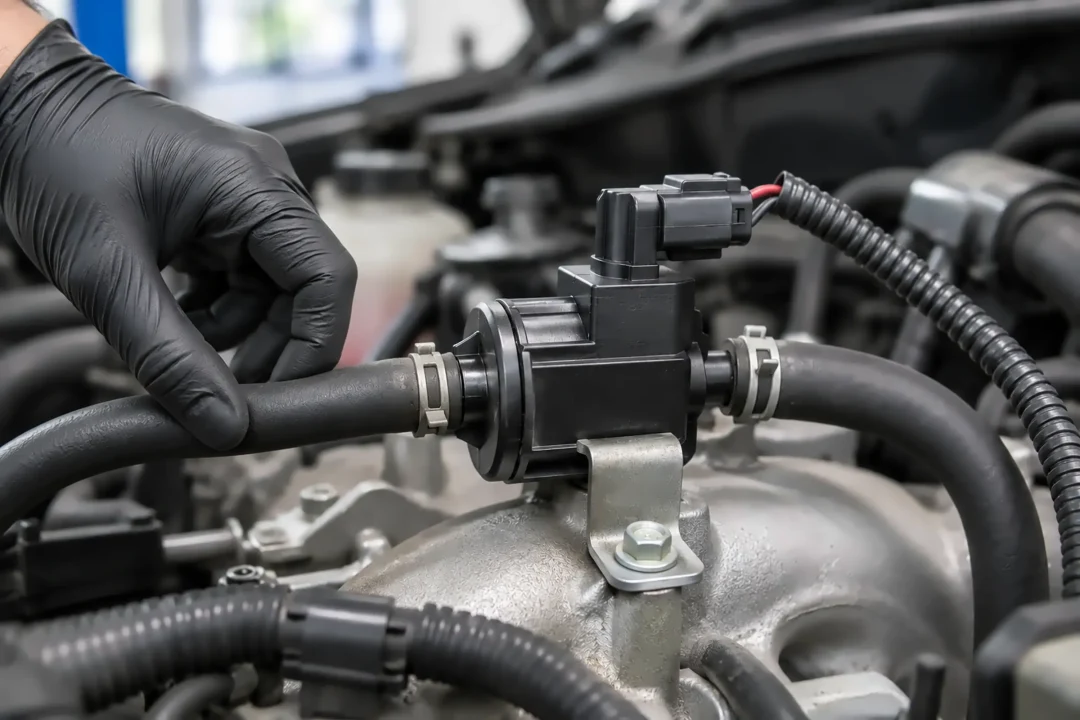
Illustrative EVAP component inspection; no failed part is implied.
Purge valve vs vent valve (P0446 / P0449)
The EVAP system usually has two controlled valves. The purge valve controls flow from the canister to the engine. The EVAP vent valve (vent solenoid) opens the canister to fresh air or seals it so the computer can run leak tests.
P0446 typically concerns vent control, and P0449 typically concerns the vent valve or solenoid circuit. They are a separate family from P0441, although symptoms such as a check engine light or trouble after refueling can overlap. A vent fault can also disturb other EVAP tests, which is one reason the whole code list matters. Testing decides which valve, if either, failed.
Why a gas cap or a random valve swap often fails
A gas cap is a sensible check for leak codes. It does not explain a purge valve that will not open, a purge circuit with a bad connection, or a collapsed hose. Tightening or replacing the cap and clearing the code can make the light go out for a while, but the next self-test usually brings it back if the flow fault is still there.
Buying a purge valve first has similar risks. A new valve cannot fix an open wire, a corroded connector, a poor ground or a disconnected hose. The original valve may also be fine, and the fault may sit elsewhere in the purge path. Clearing the code also erases freeze frame data and resets readiness monitors.
How we diagnose a P0441 (or P0496) in the shop
At eForce Automotive Service, car diagnostics for a purge-flow code follows the system:
- Full scan and freeze frame. We note every stored EVAP code, plus conditions such as fuel level and temperature when the code set.
- Commanded valve tests. Using a scan tool, we command the purge valve and check whether it responds and whether it seals when closed.
- Circuit and connector checks. We verify control, power and ground on the valve circuit. Electrical faults belong under auto electrical repair.
- Hose and path inspection. We inspect purge and related hoses, connections and the path toward the canister, using shop equipment for integrity checks when needed.
- Explain, then repair. We replace what the tests confirm: the purge valve, the vent valve, a hose or a wiring repair.
EVAP purge and vent valves and hoses are confirmed in-shop services at our Englewood shop. Fuel vapor is flammable, so pressure or smoke testing belongs with proper equipment, not as a home experiment. Do not drive with a valve disconnected as a workaround.
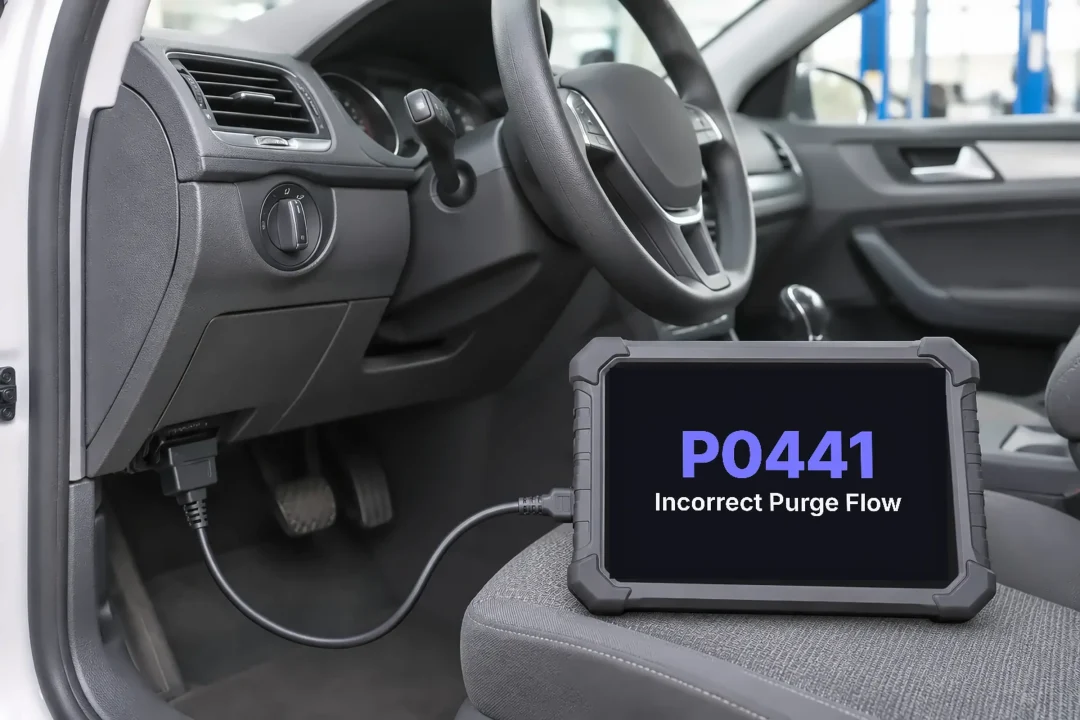
Illustrative scan tool screen; not data from a customer's vehicle.
Book through the phone number in the site header. We work in-shop only, by appointment, at 1713 W Baltic Pl, Englewood, CO 80110. See our services and service area.
FAQ
What does a P0441 code mean?
It means the EVAP system's purge flow was not what the engine computer expected during its self-test. The cause can be the purge valve, its circuit, a hose or a restriction, so testing is needed before parts.
Is P0441 the same as a P0455 EVAP leak?
No. P0455 describes a large leak where the system cannot hold pressure or vacuum. P0441 describes incorrect flow through the purge path; the two can appear together but are diagnosed differently.
What are typical purge valve symptoms?
A check engine light is the most common sign. Some vehicles also show a fuel smell, rough idle, hard starting after refueling or EVAP monitors that do not complete.
What is a P0496 code, and is it the same problem?
P0496 typically means EVAP flow during a non-purge condition, often linked to a purge valve that leaks or sticks open. It is related to P0441 but not identical, and the circuit and hoses still need checking.
Will replacing the gas cap or a purge valve always fix P0441?
No. A gas cap mainly matters for leak codes, and a new purge valve will not fix wiring or hose faults. Replace a part only when diagnosis confirms it.
How do I book EVAP / P0441 diagnosis in Englewood?
Call the number in the site header to set an in-shop appointment. Mention all stored codes and whether symptoms appear after refueling.
General information, not a diagnosis of your vehicle. Fuel vapor is flammable; do not pressurize or smoke-test EVAP systems at home.