
P0455 EVAP Large Leak: Gas Cap or Something Else?
A P0455 code means the engine computer detected a large leak in the evaporative emissions (EVAP) system. The internet’s favorite answer is “tighten the gas cap.” Sometimes that is true. Often it is not — hoses, purge and vent valves, and the filler neck create the same code.
This guide explains what P0455 means, how EVAP works in plain language, gas-cap myths vs reality, other large-leak causes, how P0455 compares to P0456 and P0442, and how shops test EVAP without unsafe DIY pressure tricks. It is general information, not a diagnosis of your vehicle. Our shop is in Englewood, Colorado, serving the Denver and south Denver metro area, and we handle check engine light diagnostics by appointment.
Quick answer: what P0455 means
- Official idea: EVAP system large leak detected.
- Plain language: the car expected the fuel-vapor system to hold a seal during a monitor, and it did not.
- Not a single part: gas cap, hose, valve, or filler path can all qualify as a “large” leak.
- Light behavior: usually a steady check engine light. For general lamp advice, see check engine light on.
EVAP in one paragraph
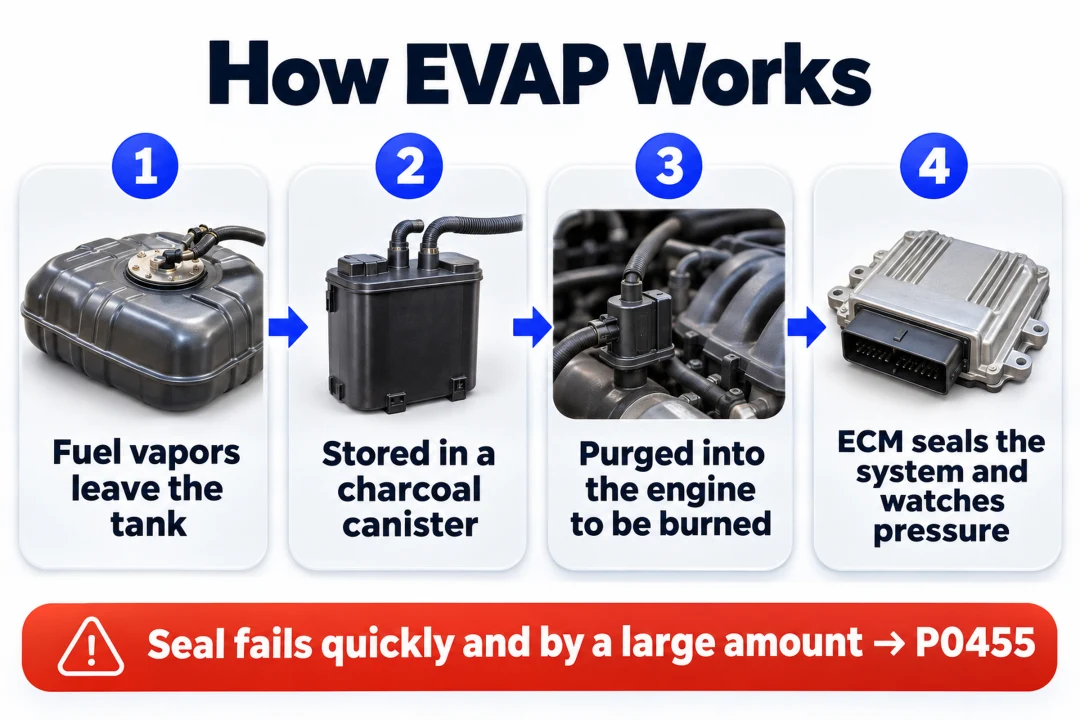
The EVAP system keeps fuel vapors out of the open air. Vapor from the tank is stored (often in a charcoal canister) and later purged into the engine to be burned. Valves control venting and purge. For monitors, the ECM seals the system and watches pressure or vacuum. If the seal fails quickly and by a large amount, you can get P0455 — an EVAP system leak in the large-leak category.
Gas cap myths vs reality
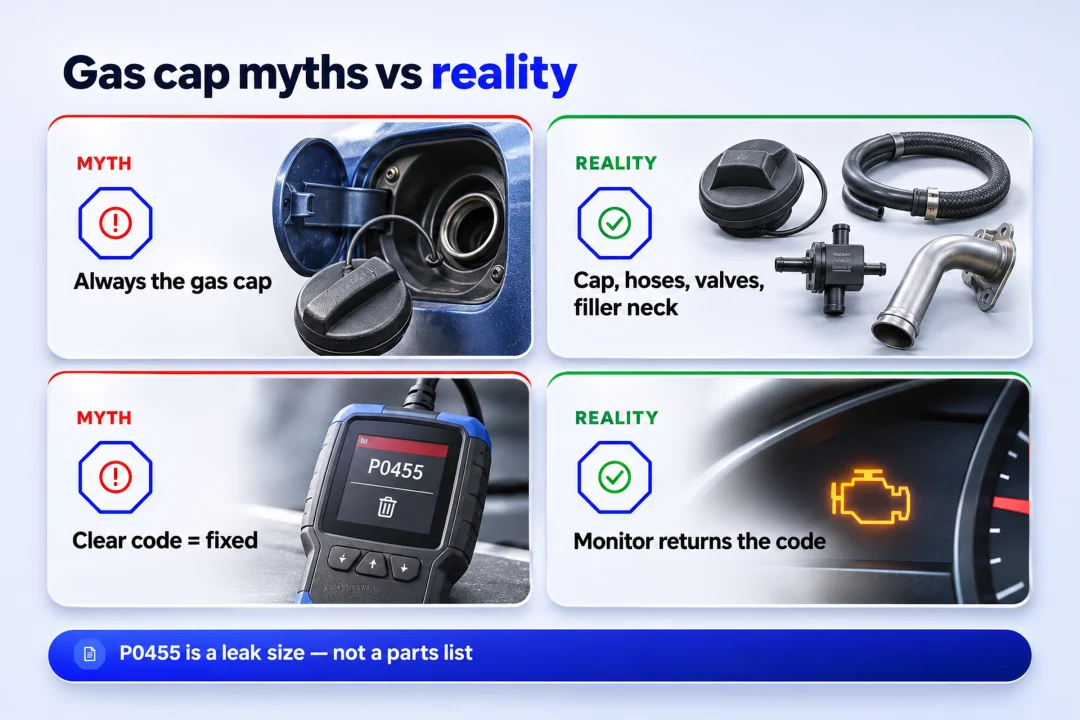
A loose gas cap check engine light story is popular because it is sometimes true. Caps crack, seals harden, and people leave them loose after fueling.
Myths to drop:
- “It is always the gas cap.” — No. Large leaks elsewhere set the same code.
- “Any new cap from the aisle fixes P0455.” — Wrong thread or seal design can fail on some vehicles.
- “Clear the code and you are done.” — The monitor will run again; the code returns if the leak remains.
- “Ignore it; it is only emissions.” — You may also fail an emissions inspection, and a real hose or valve fault can worsen.
If you recently fueled the car and the cap was loose, secure it correctly and see whether the light clears after the required drive cycles. If P0455 is stored again, stop guessing and diagnose.
Other large-leak causes
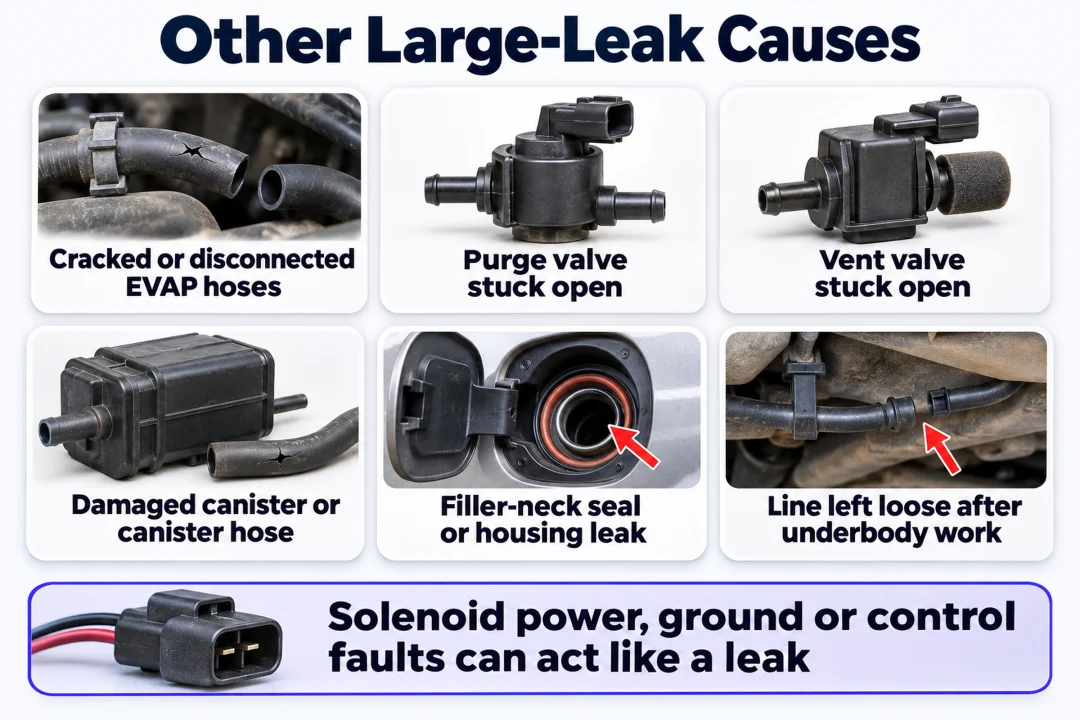
Besides the cap, common large-leak sources include:
- cracked or disconnected EVAP hoses;
- purge valve stuck open (system cannot seal);
- vent valve stuck open or not closing;
- damaged canister or canister hose;
- filler-neck seal or housing leaks;
- after a collision or roadside work, a line left loose.
Electrical faults on purge/vent solenoids (power, ground, control circuit) can also make the system behave like a leak. That side of the job falls under electrical diagnosis — see auto electrical repair. When diagnosis shows a failed purge valve, vent valve, or EVAP hose, eForce replaces those parts in-house. Other causes (for example a filler neck or canister assembly) are explained from the test results before any further work.
P0455 vs P0456 vs P0442 (and P0440)
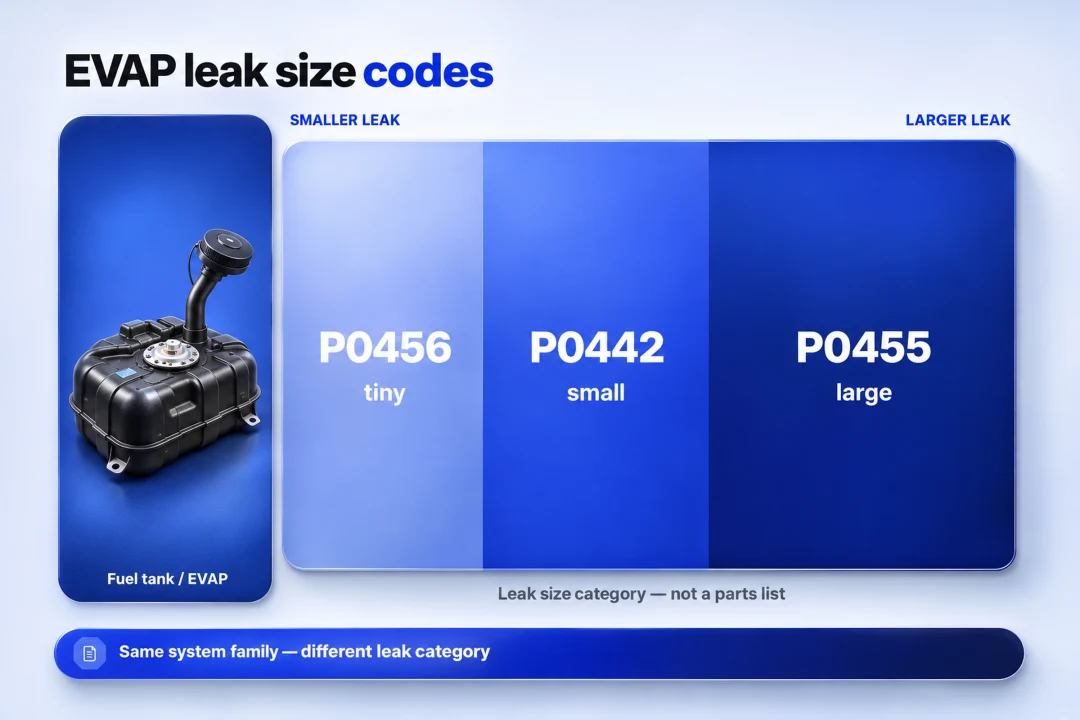
Leak size labels differ by manufacturer, but the idea is consistent:
| Code | Typical meaning | Practical takeaway |
|---|---|---|
| P0455 | Large EVAP leak | Bigger seal failure; cap is only one suspect |
| P0456 | Very small / tiny leak | Harder to find; do not ignore because it is “small” |
| P0442 | Small leak | Between tiny and large on many platforms |
| P0440 | General EVAP fault | Broader; needs freeze-frame and system tests |
A small-leak code is not “less important.” It often takes longer to find. Multiple EVAP codes together still mean: test the system, do not stack random parts.
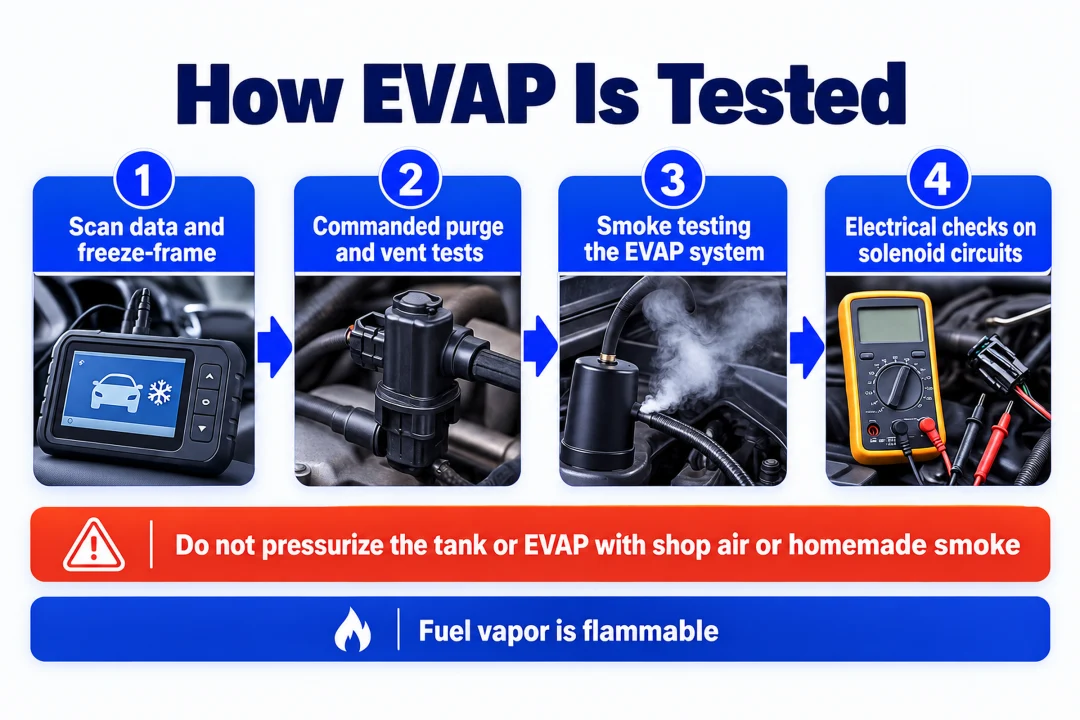
How EVAP is tested (high level — no unsafe DIY)
Shops use methods such as:
- Scan data and freeze-frame — which monitor failed, fuel level, temperature.
- Commanded purge/vent tests with a scan tool.
- Smoke testing the EVAP system to see where vapor escapes.
- Electrical checks on solenoid circuits when commands do not match reality.
What not to do at home: pressurizing the tank or EVAP lines with shop air, “homemade smoke,” or blocking vents without service information. You can damage the tank, canister, or valves, and fuel vapor is flammable.
We explain findings before further work. If other modules show odd behavior at the same time, a wider scan matters — see U0100 when communication codes appear, and dashboard warning lights when several lamps come on together.
Booking notes
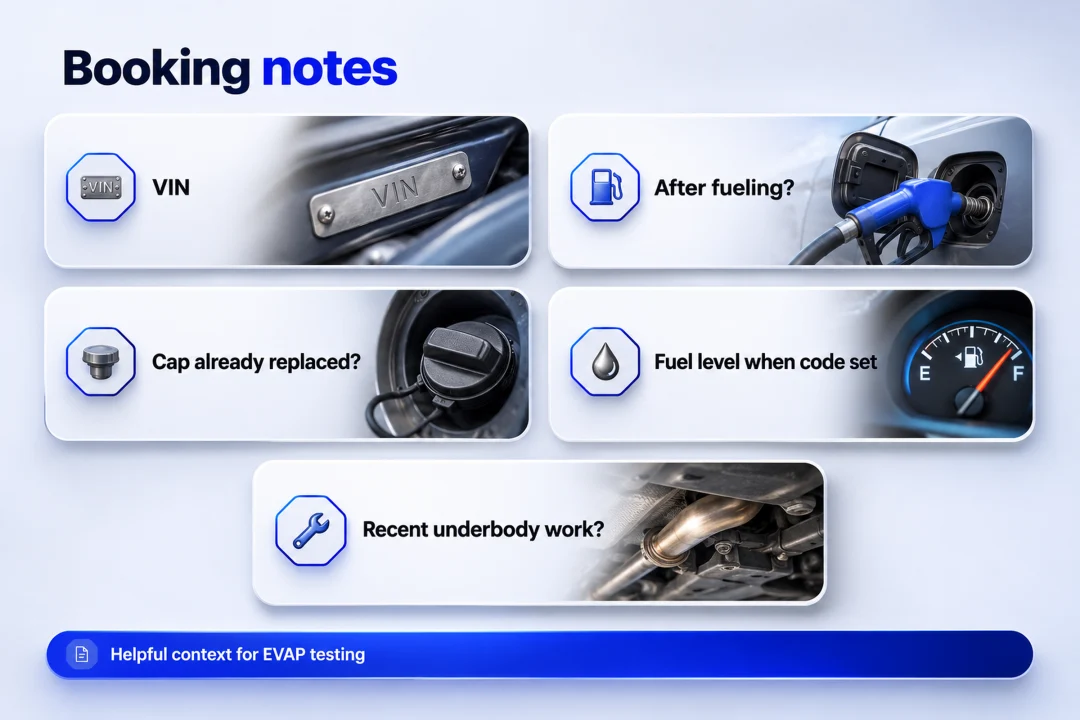
Helpful details:
- year, make, model, VIN;
- whether the light appeared after fueling;
- whether the gas cap was replaced already;
- fuel level when the code set (if you know);
- any recent collision, tow-hitch, or underbody work.
We work in-shop only, by appointment. We do not offer mobile or roadside EVAP repair.
P0455 FAQ
Can a loose gas cap really cause P0455?
Yes, on many vehicles. It is one common cause of a gas cap check engine light — not the only cause of an EVAP system leak.
Is P0456 more serious than P0455?
“Serious” is the wrong frame. P0455 is a larger leak category; P0456 is tinier and often harder to find. Both need proper testing.
Will disconnecting the battery fix P0455?
No. It may clear the lamp until the EVAP monitor runs again.
Can EVAP problems drain the battery?
Not typically like a classic parasitic draw. If the battery dies overnight for other reasons, see our parasitic draw test guide.
Do you guarantee “just replace the cap”?
No. We diagnose the EVAP fault. If the cap is the cause, the tests will show that. If it is a purge valve, vent valve, or hose, we replace those parts after the diagnosis confirms them.
Next steps
Check engine light with a P0455 code? Book a diagnostic appointment at our Englewood shop. We work in-shop only, by appointment. Start with car diagnostics.
This article is general information, not a diagnosis of your vehicle. Fuel vapor is flammable — do not pressurize EVAP or fuel systems as a DIY experiment.