
TPMS Light Flashing or On: Reset, Relearn or Sensor Programming?
A TPMS light on (tire pressure monitoring system) is easy to misread. Sometimes it is only low pressure. Sometimes a sensor battery has died, a wheel was replaced, or the vehicle never completed a relearn after a battery disconnect. A TPMS light flashing, then staying on, often points to a system fault rather than a simple air-pressure reminder.
This guide explains steady vs flashing behavior, when a TPMS reset or relearn is enough, when TPMS sensor programming is required, and why holding a dash button often fails on modern cars. It is general information, not a diagnosis of your vehicle. Our shop is in Englewood, Colorado, serving the Denver and south Denver metro area. TPMS programming is one of the services we offer; see our services overview. We work in-shop only, by appointment.
Quick answer: TPMS light flashing vs solid
| Behavior | Typical meaning |
|---|---|
| Solid TPMS / tire pressure light | One or more tires below the threshold, or a stored low-pressure event |
| Flashes, then stays on | System fault: sensor not communicating, ID not learned, module or antenna issue |
| Comes back after you filled the tires | Relearn not completed, sensor fault, or wrong sensor IDs |
Exact symbols and blink patterns vary by make. Your owner's manual is the authority for the icon on your car. Related dash warnings in general are covered in our dashboard warning lights guide.
Low pressure vs system fault
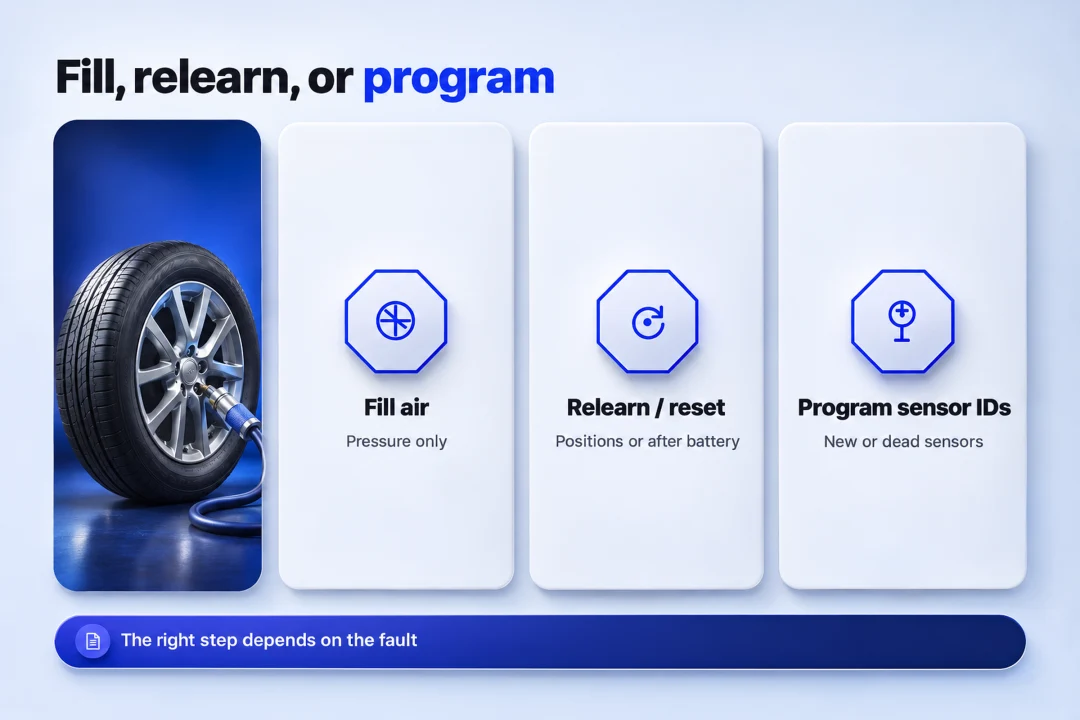
Low pressure is the everyday case: temperature drop overnight, a slow leak, or a recent tire service. Filling to the door-sticker pressures and driving a short distance often clears a solid light after the system updates.
A system fault is different. The car cannot trust sensor data — a dead sensor battery, a sensor that was never programmed after new wheels, a damaged valve sensor, or a failed relearn after module or battery work. Filling air will not fix that. That is where TPMS reset, TPMS relearn, and TPMS programming diverge.
When a reset or relearn is enough
A reset or relearn may be enough when:
- tires were rotated and the vehicle requires a position relearn;
- pressures were corrected after a cold snap or seasonal change;
- the 12-volt battery was replaced and the TPMS monitor needs to complete again;
- a procedure in the owner's manual or service information says “relearn” rather than “replace sensor.”
Procedures are vehicle-specific. Some cars relearn automatically while driving. Others need a scan-tool commanded relearn, a key-fob sequence, or a magnetic/activation tool at each wheel. Our broader overview of post-repair relearns is in relearn and calibration after repair or battery replacement.
When a sensor must be programmed or replaced
TPMS sensor programming (writing or learning sensor IDs into the module) is typically needed when:
- a sensor battery is dead (many valve sensors are sealed; the sensor is replaced as a unit);
- new wheels or aftermarket sensors were installed and IDs were never learned;
- a sensor was replaced but not programmed to the vehicle;
- the module lost learned IDs after certain electrical work.
eForce does TPMS programming. We also sell and install TPMS sensors when a sensor must be replaced. We do not sell tires and do not mount or balance tires as a tire shop. Compatibility and the exact relearn or programming procedure are checked by VIN — we do not promise “any sensor in five minutes.”
Why DIY “hold the button” often fails on modern cars
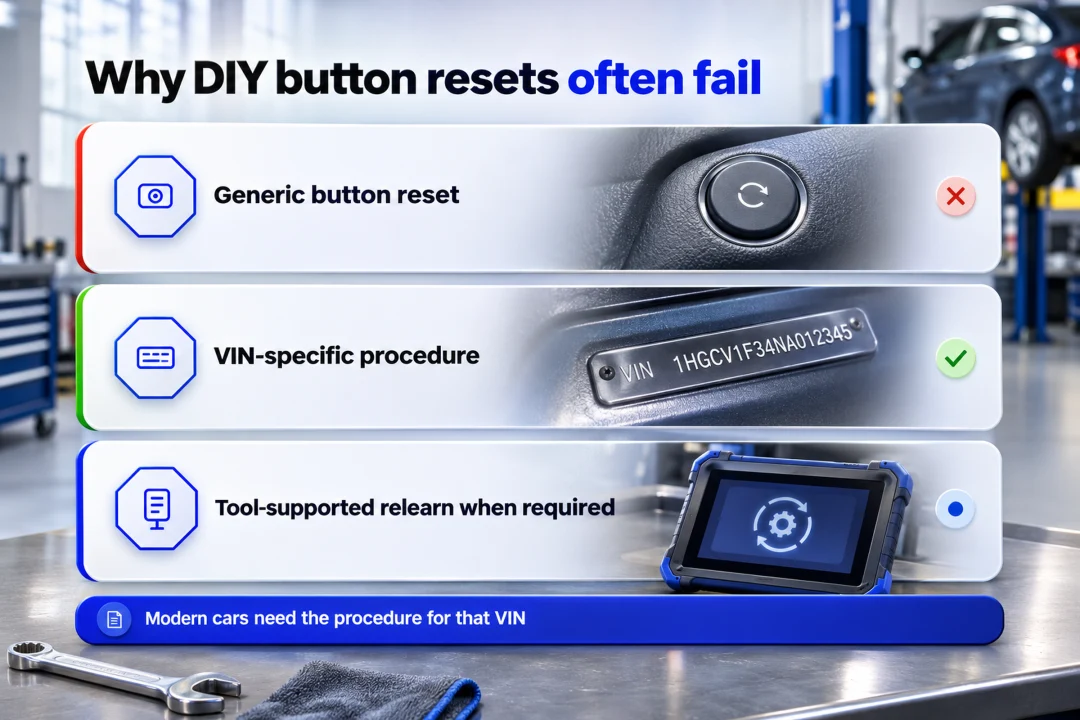
Many older vehicles had a simple TPMS reset button. Plenty of modern cars do not. Holding the hazard button, cycling ignition, or following a generic internet sequence often does nothing because:
- the platform needs a scan-tool relearn;
- each sensor must be activated in order at the wheel;
- the vehicle uses a different protocol after a wheel or module change;
- there is a real sensor or antenna fault, not a “memory” issue.
“How to reset TPMS light” advice that ignores the VIN wastes time. If the light is flashing as a system fault, a button reset will not invent a working sensor ID.
What we check
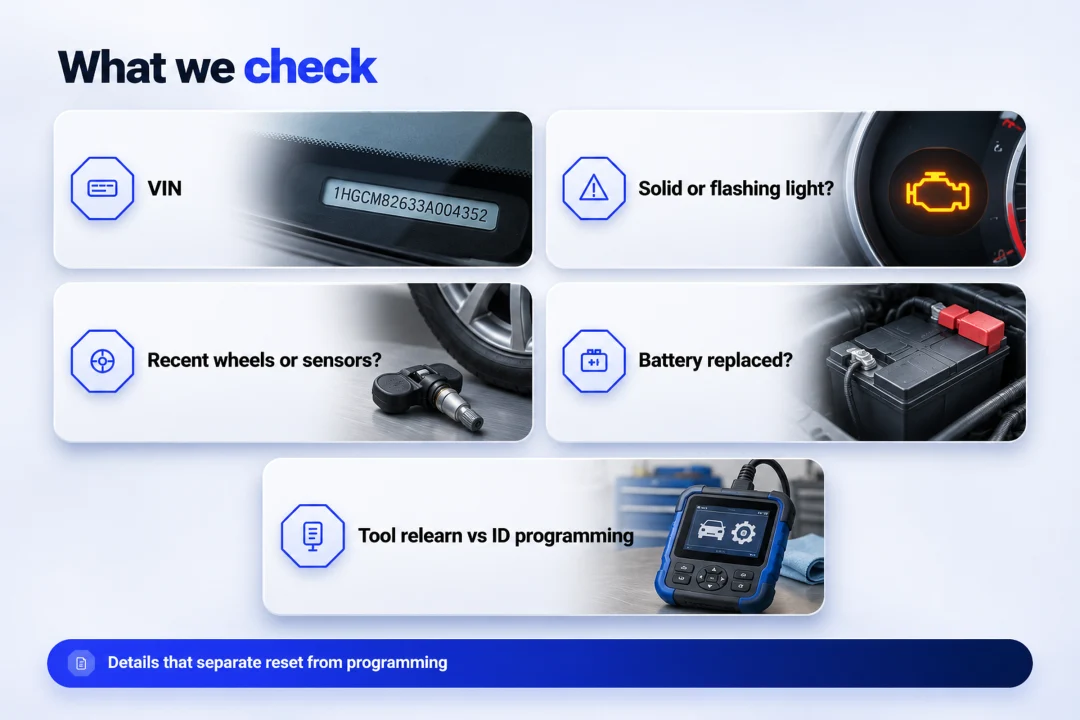
At our Englewood shop a TPMS visit typically includes:
- Confirm whether the complaint is pressure-related or a system fault (scan TPMS module data).
- Read sensor IDs and status where the tool and vehicle support it.
- Compare against service information for your VIN.
- Perform the correct relearn / reset / TPMS calibration-style procedure for that platform.
- Program new or replacement sensor IDs when required (TPMS sensor programming).
If other modules show voltage or communication issues at the same time, we widen the diagnostic — low voltage can confuse many systems; see our battery light guide when charging warnings appear. Broader module work is described on our module programming page. When the root cause is unclear, car diagnostics is the starting point.
Booking notes
Please have ready:
- year, make, model, VIN;
- whether the light is solid, flashing, or flashing then solid;
- current tire pressures if you know them;
- whether wheels, sensors, or the 12-volt battery were recently changed;
- any recent body or glass work that might have disturbed antennas or modules.
We work in-shop only, by appointment. We do not offer mobile TPMS service.
TPMS FAQ
What does a flashing TPMS light mean?
On many vehicles, a TPMS light that flashes for about a minute then stays on indicates a system fault, not just low air. Confirm the pattern in your owner's manual.
Can I reset the TPMS light myself?
Sometimes, if the manual describes a supported procedure and the only issue was pressure or a simple relearn. Many modern cars need a scan tool. Generic “hold the button” steps often fail.
Do you program aftermarket TPMS sensors?
We program compatible sensors when the vehicle and tool support them. Compatibility is verified first — not every sensor works on every car.
Do you sell tires or TPMS sensors?
We do not operate as a tire shop and do not sell tires. We do sell and install TPMS sensors when diagnosis shows a sensor must be replaced, and we program them to the vehicle.
Is TPMS the same as a wheel alignment or windshield job?
No. We do not perform alignments, windshield replacement, or body work. If those were done elsewhere and TPMS or ADAS warnings remain, we can address the programming/relearn side that falls under our services.
Next steps
TPMS light flashing or stuck on after you set the pressures? Book an appointment at our Englewood shop (Denver / south Denver metro) for a TPMS check, sensor install if needed, and programming. See our services page and the related relearn / calibration guide.
This article is general information, not a diagnosis of your vehicle. Do not drive on severely underinflated tires.