
All posts — Page 4

Relearns and Calibration After a Repair or Battery Change

Modern cars store learned values in their modules, and some repairs or a battery change can erase or invalidate them. Here is why relearns are needed, common examples such as the throttle body relearn and steering angle sensor calibration, symptoms of a missed relearn, when software updates come in, ADAS calibration, TPMS programming and why procedures are checked by VIN.

U0100 and "Lost Communication" Codes: What They Mean

U0100 means other modules lost communication with the engine computer; U0101 means the same for the transmission computer. Here is what U-codes are, the common lost-communication codes, why the module itself is often fine, the symptoms, and how CAN bus wiring, power and grounds are tested before any module is replaced.

Airbag Light On: What It Means, Whether You Can Drive and What to Do

An airbag light on the dashboard means the SRS has found and stored a fault, and the airbags may not work as designed in a crash. Here is what the light means, why it comes on, how steady, flashing and passenger airbag off lights differ, whether you can keep driving, what to do after a collision and why resetting the light is not a repair.

Check Engine Light On: What It Means and What to Do

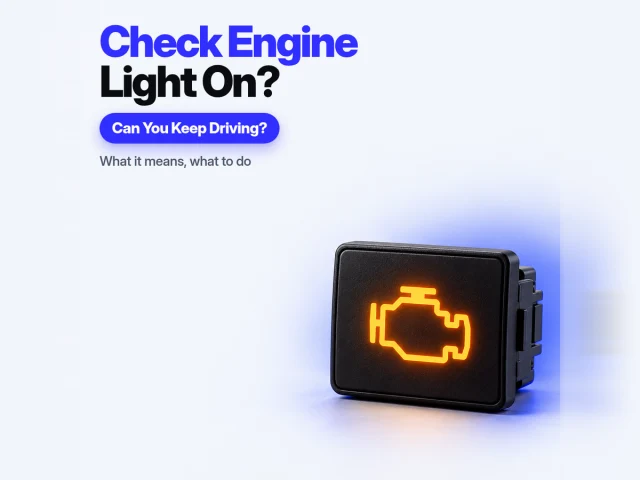
A steady check engine light means a fault has been stored; a flashing one means a serious problem that needs you to stop driving. Here is what each signal means, what to do next and why a free code read does not tell you the cause.

Audi S3 Locked ECU: Bench Access Through Boot Mode

A locked ECU does not allow normal access to its software, and the usual tools get no further. This Audi S3 came to our bench in that state. Here is how we reached the module through boot mode, what bench access makes possible, and what to know before you bring a module.

Car Won’t Start: Battery, Starter, Alternator or Immobilizer?

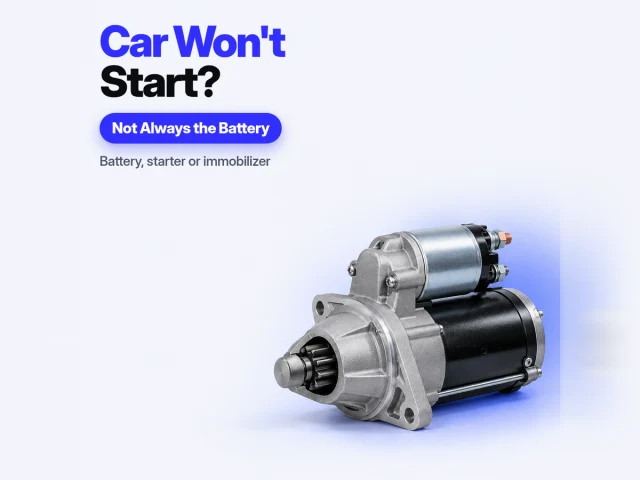
A no-start does not always mean the battery is bad. The symptom—no lights, rapid clicking, one heavy click, normal cranking with no start, or a security warning—can point toward the battery, starter, charging system, wiring, or immobilizer. Here is how to narrow it down before replacing parts.

Parasitic Draw Test: How We Find What Is Draining Your Battery

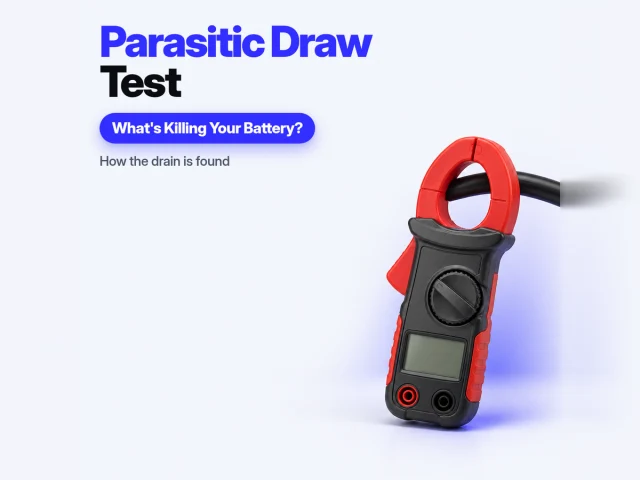
A battery that keeps going dead while the car is parked may have an excessive key-off electrical draw. A proper parasitic draw test checks the battery first, lets the vehicle enter sleep mode, measures current, isolates the affected circuit, and verifies the repair instead of replacing parts by guesswork.

Why Does My Car Battery Keep Dying Overnight?

If your car starts after a jump but is dead again the next morning, the battery may not be the real problem. A parasitic electrical draw, weak battery, charging-system fault, or damaged wiring can all cause the same symptom. Here is how to narrow it down and how a proper parasitic-draw diagnosis works.